
Conforming Bandage Use: A Guide
What is a conforming bandage?
With such a wide range of bandages to choose from, we ask: what is a conforming bandage? And discuss its features, uses, and benefits so you can decide if it’s the right bandage to use.
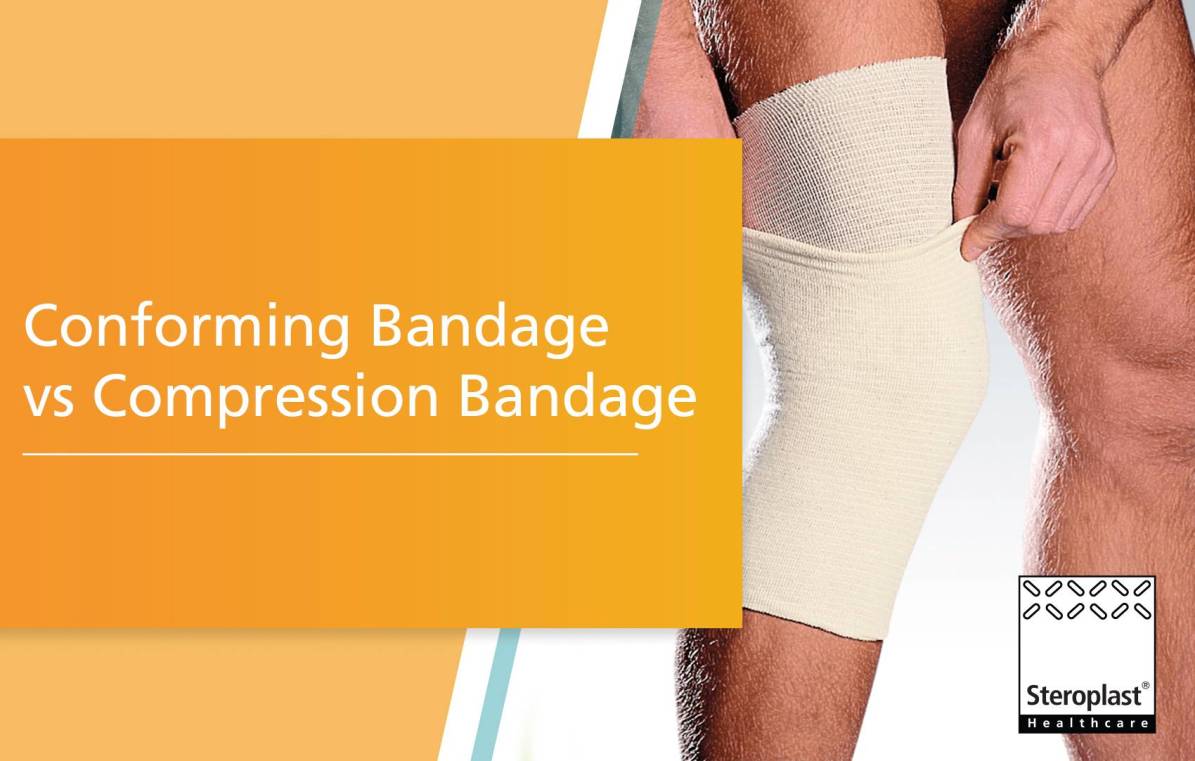
Conforming bandage definition: A high-stretch, lightweight roller bandage designed to conform to the body’s contours. Primarily used to hold dressings in place without constricting movement, they can also be used to support injured joints.
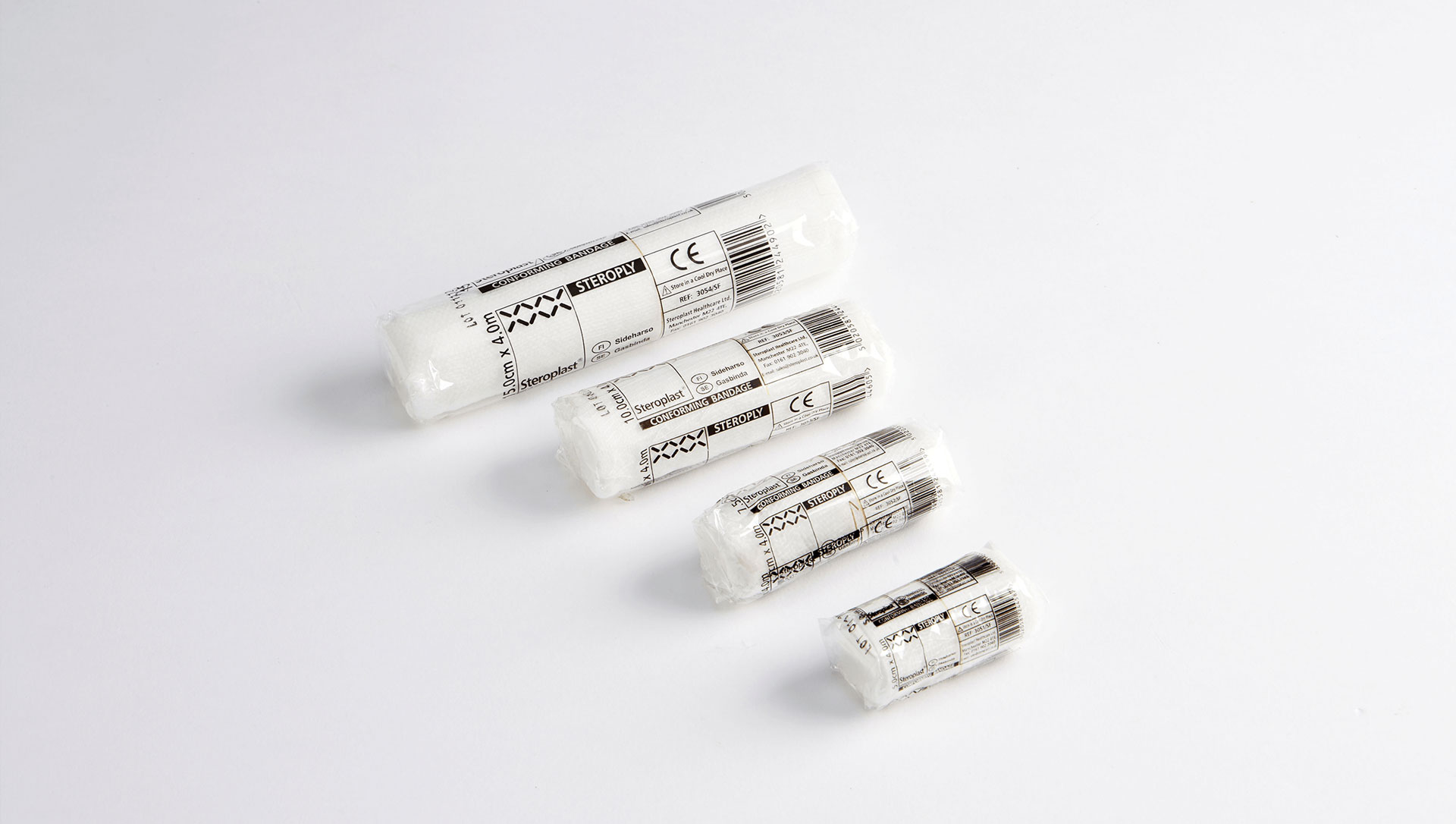
Used in hospitals, doctors surgeries, and care homes, conforming bandages are specially designed to offer light compression that aids natural healing for wounds and soft tissue injuries.
Made from a nylon and viscose weave, conforming bandages have an excellent stretch capacity and are highly flexible, breathable and fray resistant. Available in a range of widths and sizes, choose conforming bandages to wrap around and protect difficult-to-reach body areas such as between fingers and toes, knee joints, and wrists.
Conforming bandages offer mild compression, which helps to reduce inflammation and swelling while maintaining healthy circulation and breathability for the skin so they can be kept on for long periods comfortably.
So, compared to other bandages, what’s a conforming bandage and is it right for you?
We cover this on our blog, comparing conforming bandages to other popular products:
Limited-Time Deal on Personal First Aid
20% off Steroplast Mini Burn First Aid Kits
Fast, effective treatment for common burn injuries at home, work or on the move. Includes Burnshield dressings and hydrogel sachets for immediate cooling and pain relief. Supplied in a compact plastic case for kitchens, vehicles and grab bags.
Use code BURNCARE20 at checkout.
What are conforming bandages used for?
Conforming bandage use is common in many settings including hospitals, care facilities, GP surgeries, veterinary practices, and sports facilities.
Its excellent stretch capacity and breathability make it versatile for several purposes. The main reasons for conforming bandage use include:
- To secure a dressing in place comfortably.
- Wrapped over a dressing to apply pressure and control bleeding wounds.
- To compress and support a sprain or strain using a thicker weight or multiple layers.
It’s important to note that first aid kits aren’t all legally required to stock a conforming bandage. However, their versatility and usefulness mean that many of our specialist first aid kits such as our workplace first aid kit contain them for various conforming bandage purposes. For example, our Stero-paws animal first aid kit includes a 5cmx4m conforming bandage to use for treating animals.
This is because conforming bandages are used regularly in the treatment, care, and rehabilitation of animals as well as humans. Vets and animal carers sometimes use conforming bandages to protect animals during shipping, such as horses. Wrapping their legs securely before vehicle travel helps to protect their delicate legs from injury during road transportation.

For more information about the contents of our specialist first aid kits, check out our blog:
- Keeping a first aid kit at home
- What should be included in a pet first aid kit
- What should be in a workplace first aid kit
- What goes in a kitchen first aid kit
- What should be in a car first aid kit
If you’re a vet and need more information on other veterinary medical supplies Steroplast stocks, we cover a range of topics such as top tips on how to choose the right veterinary wound dressings on our blog, too.
Visit our
Personal First Aid Online Guide
Find everything you need, from first aid kits, plasters & bandages to hot & cold therapy.
How to apply a conforming bandage
Now you know how to answer the question ‘what are conforming bandages used for?’ It’s important that you know how to apply them safely.
Follow this simple guide on how to use a conforming bandage for dressing retention:
- Ensure your hands are clean before touching a wound or the materials you will use to dress it.
- Gentle clean and dry the area if you need to using running water or sterile wound wash.
- Secure a dressing in place over a wound area. Apply additional padding in place if needed. Ensure the entire wound area is protected by the dressing.
- Firmly wrap over the dressing using a figure 8 shape, or overlap for limb areas such as forearm or calf.
- Ensure the areas above and below the injury are covered with the bandage.
- Secure the bandage with medical tape or by tucking it under itself.
- Talk to the casualty to ensure the binding is comfortable. If they complain of numbness or a tingling sensation, unwrap the bandage and wrap it around again less tightly.
What other bandages are available?
Steroplast is a leading supplier in a wide range of bandages, supports and wound care products. Some other popular products you should consider include:
- Use a Sterocrepe Crepe Bandage for dressing retention and mild compression (find out how to use conforming crepe bandage in our blog).
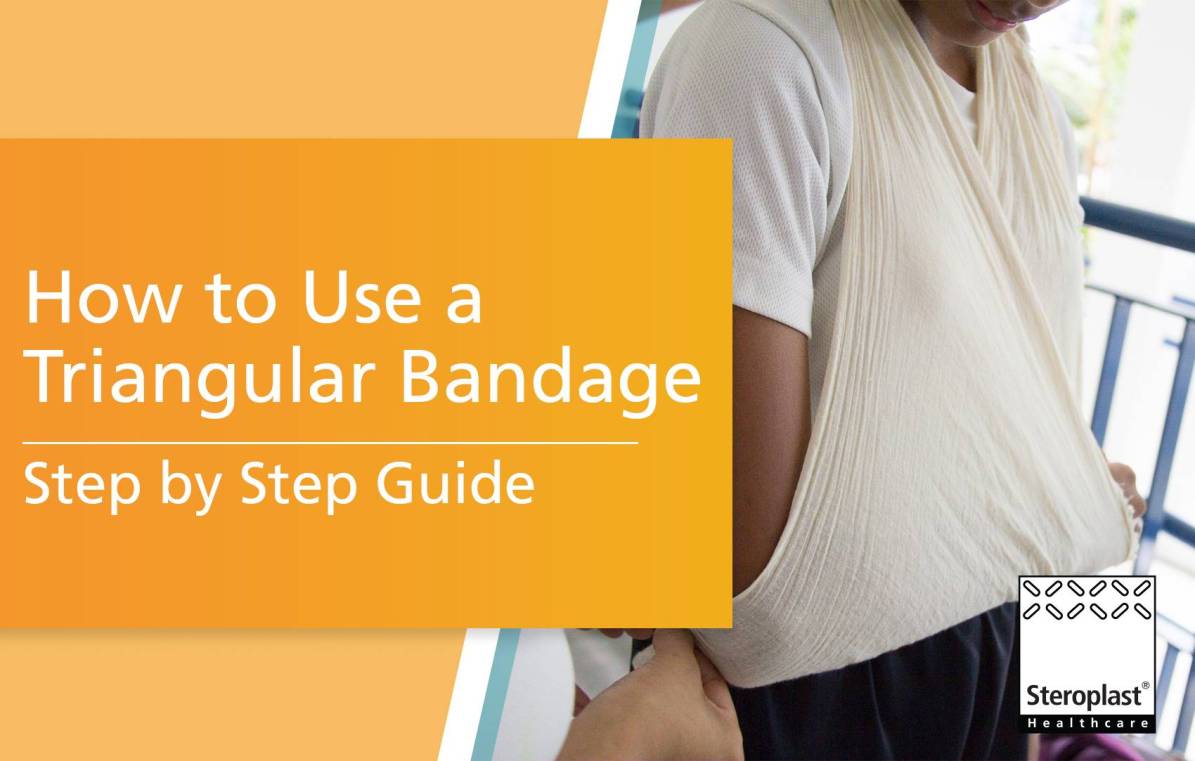
- Triangular bandages are a versatile first aid essential that you will find in all standard first aid kits. Find out how to use a triangular bandage in our blog.
- Use tubular gauze bandages and elasticated tubular bandages as the ultimate, reusable compression bandage. Apply easily with speed using our finger applicators and tubular bandage applicators in varied sizes. Find out how to apply a tubular bandage and how to use tubular finger bandage with applicator in our blog.
- For commercial kitchens and catering environments, choose blue elasticated tubular bandages for catering environments are ideal for quickly and easily protecting a dressing for long periods.
- Choose Steroban-Vet for padding and to promote air circulation underneath plaster casts.
- Immobilise injured or dislocated joints with our specially designed Sterotrac Skin Traction Kit.
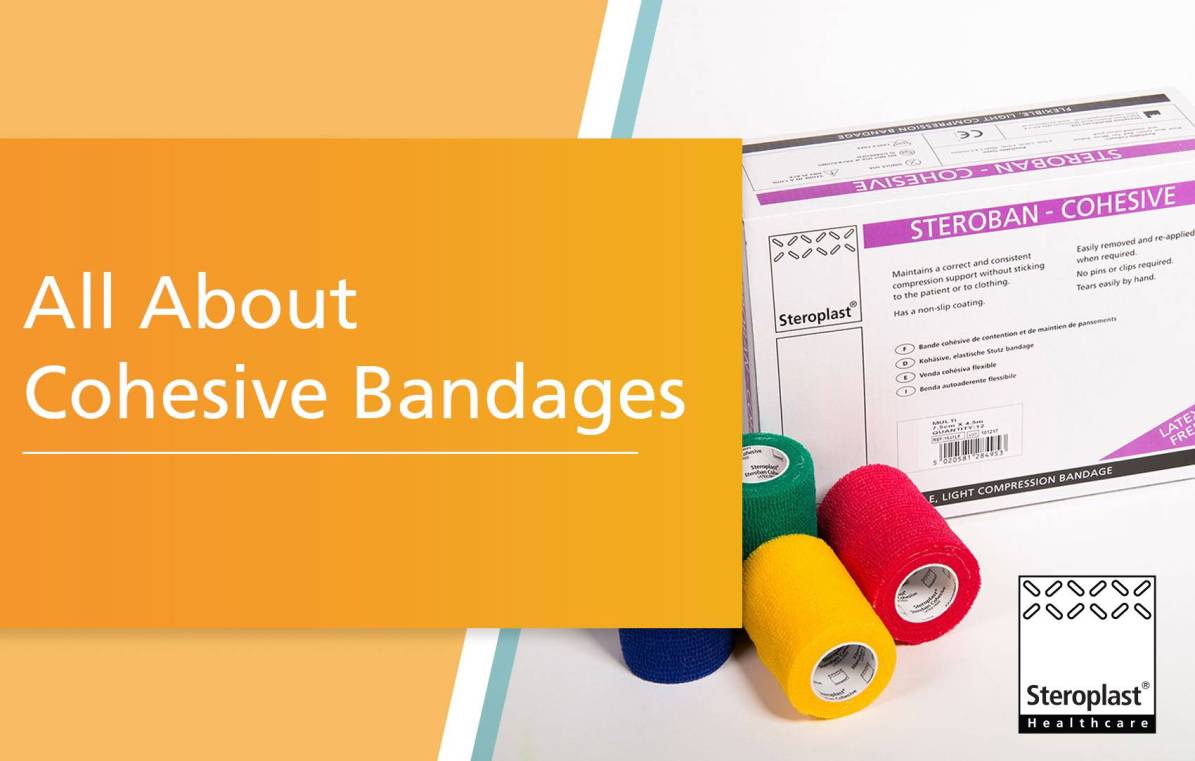
- Steroban Premium Elastic Cohesive Bandage provides strong support and compression while sticking to itself, bot skin, hair, or clothing. Read more in our article All About Cohesive Bandages
When zero compression is needed on a dressing, use a white open weave bandage.
Simplify Workplace First Aid
Interactive Online Guide & Downloadable Brochure
Simplify Workplace First Aid
Interactive Online Guide & Downloadable Brochure
Choose the format that works for you: check out our Workplace First Aid Interactive Online Guide or download our 2-in-1 Workplace First Aid & Advanced Life Support Buyers Guide as an easy-to-save PDF. Both include a self-assessment, product details, and comprehensive training and support.
Please enter your details into the form below along with any questions or comments and a member of our team will be happy to provide you with more information: