The Complete 2026 Report on First Aid & Safety Preparedness for Schools, Academies & Youth Education
The Complete 2026 Report on First Aid & Safety Preparedness for Schools, Academies & Youth Education
Schools, academies, youth groups, and organisations caring for primary and secondary school-aged children carry a legal, moral, and professional duty to protect pupils, staff, and visitors from foreseeable harm. This report provides a single, authoritative reference for meeting healthcare, first aid, health and safety, and emergency preparedness responsibilities in 2026.
This is not a compliance checklist. It is a decision-support framework that shows you what risks apply to your setting, what the law requires, and, critically, what you must do, provide, and maintain to demonstrate competence when it matters most.
Headteachers, site managers, safety officers, practice managers, and designated leads responsible for first aid, pupil safety, and regulatory adherence in UK schools, academies, youth groups, and community organisations serving children aged 5–18.
Contents

Practical First Aid Support for Schools and Academies
From British Standard first aid kits and sports first aid bags to eyewash, burncare, signage, AEDs, and school trip kits, Steroplast can help education settings stay prepared, compliant, and confident.
Browse Steroplast’s Range1. Understand Your Risk Profile
Educational settings for school-aged children are high-occupancy, high-movement environments with varied activity types and mixed supervision ratios. You perform day-to-day care for hundreds or thousands of children transitioning between classrooms, sports facilities, science labs, outdoor play areas, and off-site locations.
What You Must Prepare For
High-frequency, low-severity incidents
You will encounter these:
- Playground injuries: ~40,000 children under 15 require medical attention annually UK-wide; 80% result from falls to ground surface.
- Slips, trips, falls: Make up around 40% of reported accidents in education environments.
- Minor wounds, cuts, grazes: Daily occurrences requiring basic first aid.
- Sports injuries: Sprains, strains, growth plate irritation, stress fractures.
Low-frequency, high-impact emergencies
You may never experience these, but must be ready:
- Anaphylaxis: 680,000 children in England have allergies; 1 in 5 fatal food-anaphylaxis cases occur in schools. Without IM adrenaline within minutes, a child is at risk of deteriorating to respiratory and cardiac arrest.
- Cardiac arrest: Defibrillation within 3–5 minutes of cardiac arrest can result in survival rates of 50–70%. Survival falls by approximately 7–10% for each minute defibrillation is delayed without CPR. Without an on-site AED, you cannot achieve this window.
- Asthma attacks: 1 in 11 UK children have asthma. Severe attacks require immediate intervention.
- Choking: A potentially serious and sometimes silent emergency requiring active supervision and immediate response.
Consequences of Being Unprepared
- Pupil death or serious harm from a delayed or incorrect emergency response.
- HSE prosecution for breaches of health and safety law.
- Ofsted enforcement action: formal warnings, inadequate ratings.
- RIDDOR non-compliance: unlimited fines in both Magistrates’ and Crown Courts, with potential prosecution of responsible individuals.
- Civil liability, negligence claims, reputational damage.
The reality: Medical emergencies in schools are unpredictable. When one happens, your response must be immediate, coordinated, and confident. Equipment sitting in a cupboard is not preparedness.
2. UK Legal & Regulatory Framework
What the Law Requires You to Do
Health and Safety at Work Act 1974
You must ensure, so far as reasonably practicable, the health, safety, and welfare of everyone affected by your setting: employees, pupils, visitors, contractors, volunteers.
Health and Safety (First Aid) Regulations 1981
You must:
- Conduct a first aid needs assessment considering workplace hazards, workforce size, pupil numbers, activity types, and known medical conditions
- Provide adequate first aid equipment (BS 8599-1 compliant kits are recommended)
- Appoint a competent person or ensure trained first aiders are available:
| Workforce Size | Suggested Minimum Provision | Training Level |
|---|---|---|
| Fewer than 25 employees | At least one appointed person (where a first-aid needs assessment shows this is sufficient) | Emergency first aid training recommended, but not statutory |
| 25–50 employees | At least one first aider | Emergency First Aid at Work (EFAW) is typical |
| More than 50 employees | At least one First Aid at Work (FAW) trained person per ~100 employees | First Aid at Work (FAW) |
First Aid certificates valid 3 years. HSE recommends annual refresher training to maintain skills.
- Inform all employees of first aid arrangements (location of kits, who to call, emergency procedures)
Early Years Foundation Stage (EYFS) Statutory Requirements – Paediatric First Aid
If your site includes early years provision (children under 5), at least one person with a current Paediatric First Aid (PFA) certificate must be on the premises at all times when children are present, and must accompany children on outings. Training must be the full PFA course (12 hours), renewed every 3 years.
Children and Families Act 2014 & DfE Statutory Guidance
You must:
- Support pupils with medical conditions to access the same opportunities as other pupils
- Develop Individual Healthcare Plans (IHCPs) for pupils with long-term/complex conditions where appropriate
- Ensure sufficient staff are suitably trained to manage conditions and respond to emergencies
- Ensure arrangements are clear and unambiguous about what to do in an emergency
Defibrillators in Schools
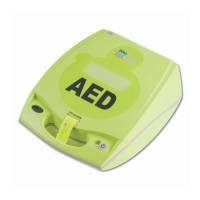
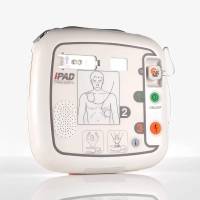
Since September 2023, the Department for Education has required all state-funded schools in England to have at least one AED on site as a condition of funding. DfE provided 20,000+ defibrillators with 8-year lifecycle support (pads every 2 years, batteries after 4 years).
While not legally mandatory for independent schools, it is strongly recommended. Recommended placement: sports facilities (physical activity increases cardiac arrest risk).
RIDDOR 2013
For employees, you must report:
- Fatal injuries: without delay, followed by a written report within 10 days
- Specified injuries (fractures excluding fingers/thumbs/toes, amputations, loss of sight, crush injuries, serious burns): within 10 days
- Over-7-day injuries (prevents normal work >7 days): within 15 days of incident
For pupils and other non-workers, report only when:
- The accident is fatal
- The accident is caused by the work activity of the school (equipment failure, inadequate risk management, unsuitable activity design)
- The accident results from non-consensual violence
Do NOT report: Ordinary play accidents, sports injuries without equipment/supervision failure, slips/trips with no environmental cause.
Non-compliance penalties: Unlimited fines in both Magistrates’ and Crown Courts; prosecution of responsible individuals and/or school leaders. Records must be kept 3+ years.
3. First Aid Provision & Workplace Preparedness
Use this framework:
Step 1: Assess your site
- Practice size and layout (single building, multiple sites, sports fields? etc.)
- Proximity to emergency services (999 response time?)
- Access for ambulances
Step 2: Assess your workforce and pupil population
- How many employees? How many pupils?
- Age range of pupils
- Work patterns (after-school clubs, out-of-hours activities?)
Step 3: Assess your hazards
- Playground equipment, sports activities, science labs, design technology, etc.
- History of accidents (review accident book)
- Known medical conditions (asthma, allergies, diabetes, epilepsy, etc.)
Step 4: Determine the provision required
- How many first aiders are needed?
- What size, type and number of first aid kits?
- Additional equipment (eyewash, burn care, bleed control)
Gov.uk requires “a suitable first aid container stocked in accordance with the findings of the first aid needs assessment and holding at least the minimum requirements suggested by HSE.”
Four components should be in place:
- Trained personnel available on-site
- Appropriate equipment accessible and current
- Clear protocols documented and known by all staff
- Ongoing maintenance (checking, restocking, reviewing)
Common failures: Kit locked in manager's office; only one first aider (no cover during absence); expired items not replaced; no refresher training between 3-year renewals.
First aid kit contents
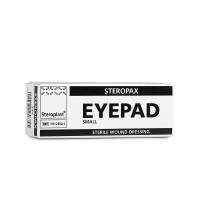
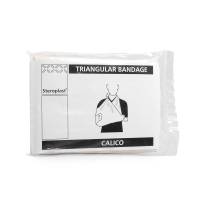
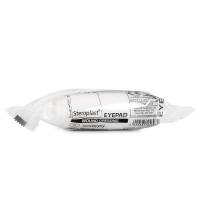
Action: Base the contents of your kits on the first aid needs assessment. Include the HSE minimum (20 plasters, 2 eye pads, 2 triangular bandages, 6 safety pins, 6 medium + 2 large dressings, disposable gloves) based on low-risk requirements, but increase supplies dependent on the outcome of the assessment.
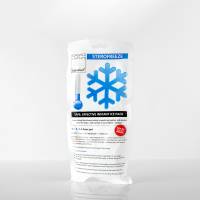
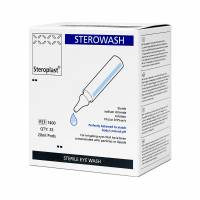
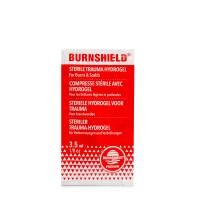
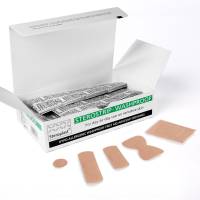
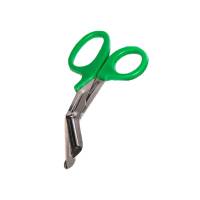
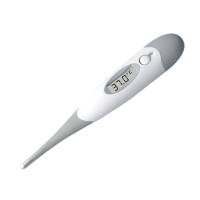
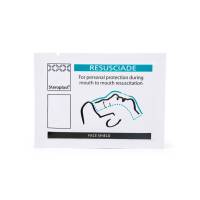
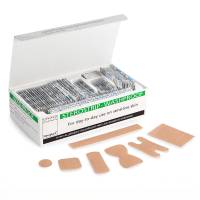
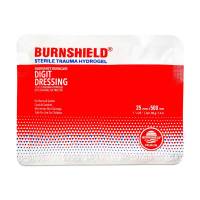
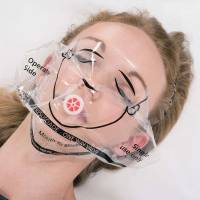
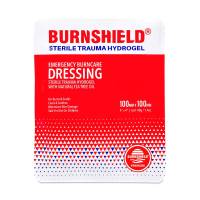
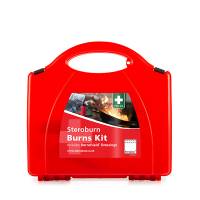
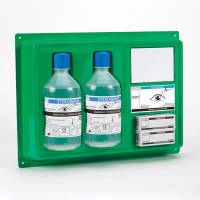
Add recommended school-specific items (including instant ice packs, eye wash pods/bottles, burn gel sachets/dressings, hypoallergenic plasters, child-appropriate sizing of bandages and dressings, scissors, tweezers, thermometer, foil blankets, CPR shield, guidance leaflet). Specific additional contents should be informed by the findings of your first aid needs assessment.
HSE First Aid Kits: The Recognised Minimum Standard
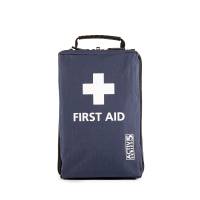
HSE-compliant first aid kits are commonly used as general-purpose kits across educational environments. They are suitable for staff areas, classrooms, offices, and smaller sites, providing the essential supplies needed to manage common minor injuries such as cuts, grazes, and minor eye injuries.
However, the HSE list represents the minimum suggested contents only. Schools should increase quantities or add additional items depending on factors such as pupil numbers, site layout, activities undertaken, and the outcome of the first aid needs assessment.
Steroplast also offers school-specific kits built around HSE guidance, designed for different locations and uses across a school site. These formats help ensure essential supplies are accessible where incidents are most likely to occur.
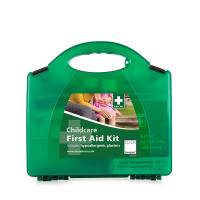
Steroplast Premier HSE Childcare First Aid Kit
A comprehensive kit suitable for general school environments, such as staff rooms, medical rooms, or main first aid points.
Steroplast School Classroom First Aid Kit
A compact, wall-mountable kit designed for immediate access within classrooms, enabling staff to treat minor injuries quickly without leaving pupils unattended.
Steroplast HSE Mini Childcare First Aid Kit
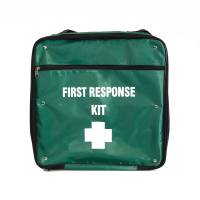
A portable pouch ideal for school trips, playground supervision, sports activities, or mobile staff who may need first aid supplies while away from the main building.
British Standard First Aid Kits (BS 8599-1): Enhanced Provision
British Standard first aid kits are designed to provide a more comprehensive level of first aid provision than the basic HSE minimum guidance. Compared with HSE kits, British Standard kits typically include:
- A broader range of dressings and bandages
- Burn dressings and additional wound care products
- Larger quantities of essential items
- Clearly defined kit sizes for different workforce numbers
For larger schools, multi-building campuses, or environments with higher levels of activity, British Standard kits can provide greater resilience and coverage, ensuring sufficient supplies are available when incidents occur. Always refer to your first aid needs assessment to determine what size and number of kits your site needs.
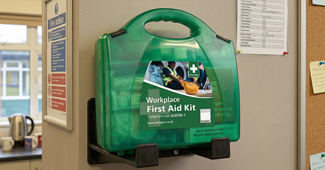
Invest in Steroplast’s Premier BS8599-1 First Aid Kit for School Safety
- The gold standard of workplace first aid kits
- Made to BS8599-1 specifications to offer businesses the required level of quality to comply with health and safety laws in the UK
- 3 different sizes to suit your site’s needs
Sports First Aid Kits for Schools
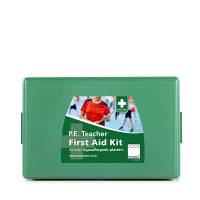
Schools and academies should consider providing additional specialist sports first aid kits to support the types of injuries commonly associated with physical activity. Kits designed for PE lessons, team sports, and pitchside use ensure staff have appropriate supplies readily available for sprains, strains, impact injuries, and bleeding wounds, helping them respond quickly during training sessions, matches, and extracurricular sports.
Steroplast offers a range of professional-grade Sports First Aid Kits
- Ensure your sports hall, gym, or arena is fully equipped and compliant with the health and safety requirements set out in your risk assessment
- Provide easily accessible, comprehensive first aid supplies as quickly as possible
- Choose from a range of kits designed with sports injury and first aid experts
First Aid Kit Locations
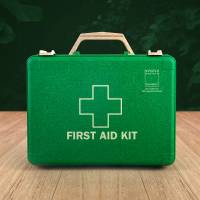
The HSE stipulates that “First-aid containers should be easily accessible and clearly marked with a white cross on a green background.” Kits should be easy to find and clearly marked so people can locate them quickly in an emergency, so adding wall-mounted first aid signage is recommended.
Browse Steroplast’s First Aid Signage range here >
Use your first aid needs assessment to determine the number of kits your site needs and their locations.
Recommended best practice is to position multiple kits with signage in:
- Each building or floor
- Sports facilities (changing rooms, halls, pitches)
- Science labs and technology workshops
- Main office and reception
- Portable kits for playground duty and off-site activities
4. Provision for Off-Site Activities & Educational Visits
Off-site environments often introduce extended response times, remote locations, and higher-risk activities. Legal requirements for health, safety and first aid provision apply wherever staff and pupils are engaged in school activities.
First Aid Personnel Requirements
Schools must ensure appropriate first-aid provision for off-site visits based on a first-aid needs assessment, taking into account the type of trip, level of risk and access to emergency services. As a matter of recommended practice, at least one staff member with a current first-aid qualification should attend every trip, but this is not a statutory requirement unless indicated by the trip’s first-aid needs assessment.
Use the table below as a guide to the level of training staff should have, depending on the hazard level of the trip.
| Trip Type | Risk Level | Recommended Qualification |
|---|---|---|
| Low-risk, urban, close to emergency services | Low | EFAW minimum |
| Standard day trips | Moderate | FAW recommended |
| Remote locations, adventurous activities | High | Outdoor First Aid (16 hours) |
| Residential trips | Moderate-High | FAW or Outdoor First Aid |
Provide a Trip-Specific First Aid Kit
Recommended contents:
Action: Ensure you bring along any personal medications and emergency plans for pupils with known conditions.
Steroplast’s School Trip Travel First Aid Kit Has Your School Excursions Covered
- A kit designed to be taken on the road. Put it in your minibus or backpack
- Contains all the recommended items above for first aid in remote places
- A protective hard-shell case keeps items safe
- Wall bracket included. Install it next to the minibus door so you never forget it
Pre-Departure Checklist
- [ ] All staff know who the designated first aider is and where the kit is kept
- [ ] Emergency contact details for all pupils is available
- [ ] Staff mobile phones charged
- [ ] School office has a detailed itinerary, contact details, and expected return time
- [ ] Risk assessments completed and shared
5. Equipment & Provision: What Your Setting Needs
The right first aid provision depends on your environment, the level of risk, and how quickly staff may need to respond. Below is a practical guide to the additional equipment many schools, academies, and sports facilities choose to keep on site.
6. Training, Competence & Confidence
Use your first aid needs assessment to determine exactly what first aid training your staff requires. Guidance from HSE and the table below can help you decide what levels of training and courses are likely most suitable for first aid compliance.
| Role | Best-Practice Training Recommendations | Rationale |
|---|---|---|
| Designated first aiders | EFAW or FAW (3-year validity) | Manage a full range of incidents |
| All teaching staff | Basic first aid awareness | Recognise emergencies, call for help |
| Lunchtime supervisors | First aid training recommended | High-risk period for playground injuries |
| Office/admin staff | Basic first aid awareness | First point of contact in emergencies |
| Sports coaches/PE staff | Outdoor first aid recommended | Higher injury exposure |
Paediatric-Specific Training Available
| Course | Duration | Validity | When Required |
|---|---|---|---|
| Paediatric First Aid (full) | 12 hours (2 days) | 3 years | Essential in certain EYFS settings. Recommended: primary schools and nurseries |
| Emergency First Aid for Schools | 6 hours (1 day) | 3 years | Tailored EFAW with school-specific scenarios |
Condition-Specific Training
These courses are only required in line with your first aid needs assessment to ensure staff are suitably trained for the specific students they support.
| Course | Duration | Validity | When Required |
|---|---|---|---|
| Anaphylaxis training | 1–2 hours | Annual refresh | Recognising reactions; using AAIs |
| Asthma training | 1–2 hours | Annual refresh | Recognising/managing attacks |
| Epilepsy training | 1–2 hours | As needed | Managing seizures; emergency medication if part of IHCP |
Key point: Training is only useful when the right people have the right level, refresh it before expiry, and can apply it calmly in real school situations.
7. Medical Conditions Management
Legal basis: Children and Families Act 2014; DfE statutory guidance.
Who may require an IHCP: Pupils with Type 1 diabetes, severe allergies/anaphylaxis risk, epilepsy, severe/poorly controlled asthma, complex/life-limiting conditions.
IHCP must include:
- Condition, triggers, signs, symptoms and treatments
- Pupil’s resulting needs, including medication (dose, side effects, storage), other treatments, time, facilities, equipment, testing, access to food and drink where relevant, dietary requirements, and environmental issues
- Educational, social and emotional support needs
- Level of support needed, including any self-management and support in emergencies
- Who will provide support, their training needs, expectations of their role, confirmation of proficiency, and cover arrangements
- Who in school needs to know
- Arrangements for written permission for medicines administered by staff or self-administered during school hours
- Separate arrangements for school trips and other activities outside the normal timetable
- Confidentiality arrangements
- What to do in an emergency, including who to contact and contingency arrangements
- Review date: at least annually, or earlier if needs change
Distribution: Share with all relevant staff (teachers, TAs, lunchtime supervisors, trip leaders). Balance confidentiality with need for safe emergency response.
Anaphylaxis Management
Risk scale: 680,000 school-aged children in England have allergies, and approximately 20% of fatal food-anaphylaxis reactions in children occur at school.
Symptoms (one or more):
- Difficulty breathing or noisy breathing
- Swelling of tongue/throat
- Difficulty speaking or hoarse voice
- Persistent cough or wheeze
- Dizziness, confusion, collapse
- Pale/clammy skin
- Widespread rash or hives
Emergency response:
- Administer adrenaline auto-injector (AAI) immediately (EpiPen, Jext, Emerade)
- Call 999 and state "anaphylaxis"
- Lie person flat (or sit if breathing difficult)
- Second dose after 5 minutes if no improvement
- Monitor continuously until paramedics arrive
Asthma Management
Prevalence: 1 in 11 UK children have asthma.
Emergency inhalers: Schools have been permitted to hold emergency salbutamol (blue reliever) inhalers since October 2014.
Asthma attack response:
- Sit upright; loosen tight clothing
- Give reliever inhaler immediately (one puff at time through spacer if available)
- If no improvement: continue 1 puff every 30–60 seconds, up to 10 puffs
- Call 999 if no improvement after 10 puffs, exhaustion, blue lips, unable to talk
8. Emergency Response & Critical Incidents
Critical incidents exceed normal coping mechanisms and require a coordinated, multi-agency response.
CIMT Structure
| Role | Responsibility |
|---|---|
| Headteacher/Deputy Head (team leader) | Coordinate immediate response; liaise with external agencies |
| Senior management team | Support operational response |
| Designated safeguarding lead | Manage safeguarding implications |
| Business manager/site manager | Manage site security, utilities, access |
| Communications lead | Media liaison; parent/staff communications |
Fire Evacuation Requirements
| Requirement | Detail |
|---|---|
| Fire alarm system | Tested weekly |
| Clearly marked fire exits | Emergency lighting |
| Designated assembly points | Safe distance from buildings |
| PEEPs | Personal Emergency Evacuation Plans for mobility-impaired pupils/staff |
| Fire drills | As determined by fire risk assessment (at least once per term is recommended) |
Lockdown Procedures
Legal/regulatory context:
- DfE requires schools have a security lockdown procedure in place and provides guidance.
- Terrorism (Protection of Premises) Act 2025 (Martyn's Law)
| Element | Requirement |
|---|---|
| Drill frequency | Minimum annually; perform at a frequency proportionate to risk, age range and setting |
| Alert system | Dedicated lockdown signal; must be clearly distinguishable from fire alarm |
| Safe areas | Lockable doors; where possible, be capable of being locked or barricaded; should reduce exposure to sightlines or flying glass; ensure communication capability between staff |
9. Maintenance, Audits & Compliance
| Check Frequency | Context |
|---|---|
| Monthly | Best practice |
| Every 3–6 months | Minimum acceptable |
| After every use | Immediate restocking |
Contact Steroplast to order first aid kit refills and restock your supplies so you’re never cut short in an emergency.
Kit Inspection Checklist
| Item Category | Check For |
|---|---|
| Sterile dressings/bandages | Expiry dates; intact packaging; no moisture/damage |
| Adhesive plasters | Expiry dates; adhesive effective; no discolouration; packaging intact |
| Gloves | No tears; brittleness; within expiry |
| Wipes/gels | Expiry dates; sachets not dried out/leaking |
| Eye/wound wash | Expiry date; seal intact |
| Instant cold packs | Not activated; packaging intact |
Document all checks. Records demonstrate compliance during inspections/audits.
Medicine Storage Requirements
| Storage Type | Temperature | Additional Requirements |
|---|---|---|
| Room temperature | Not above 25°C | Locked cupboard; away from sunlight/heat sources |
| Refrigerated | 2–8°C | Monitor temperature daily; separate shelf; clearly labelled container |
Defibrillator Maintenance
| Check Type | Frequency | Action |
|---|---|---|
| Status indicator | Monthly | Ensure green/ready status |
| Battery expiry | Monthly | Check expiry date |
| Pad expiry | Monthly | Check expiry date |
| After use | Immediate | Replace pads and battery |
Records to Maintain
| Record Type | Content | Retention Period |
|---|---|---|
| First aid needs assessment | Risk factors, provision levels | Review annually at a minimum |
| First aid kit inspection logs | Dated records of all checks | Ongoing |
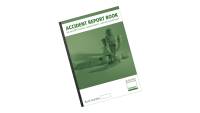
| Accident book | All injuries and first aid administered | 3+ years |
| RIDDOR reports | Copies of all submissions | 3+ years |
| Training certificates | All first aiders, specialist-trained staff | Track expiry dates |
| Medicine administration records | Every dose given | Per IHCP/school policy |
10. Future-Proofing Your Setting
Regulatory direction:
- DfE challenged all schools to eliminate single-use plastics by 2022
- NHS committed to reduce consumer single-use plastics reductions under Green Plan
Sustainable first aid options:
- Reduction in plastic packaging
- 100% recycled kit containers
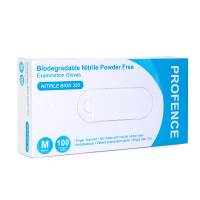
- Biodegradable nitrile gloves
- HSE-compliant
- Cost comparable to traditional kits
Buy Steroplast’s Eco-Friendly HSE First Aid Kit >
Public Access to Emergency Equipment
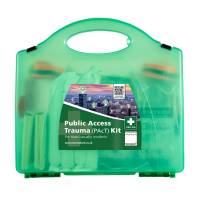
Emerging expectation: Schools as community hubs are expected to provide public access to AEDs and bleed control kits, particularly during out-of-hours community use.
Mental Health Parity
Policy direction:
- Mental Health Support Teams (MHSTs) expanding to 100% of schools by 2029/30
- DfE Education Staff Wellbeing Charter
Emerging Regulatory Requirements
| Area | Timeframe | Implication |
|---|---|---|
| Martyn's Law | From 2027 | Qualifying public venues require documented procedures for terrorist threats |
| Plastic reduction mandates | Ongoing | DfE’s sustainability strategy includes reducing or eradicating single-use plastics, so procurement policies will have to address this |
11. What You Must Do Now
Preparedness is not about having equipment in a cupboard. It is about knowing, with absolute confidence, that when a pupil collapses, when the Ofsted inspector arrives, when an HSE investigation occurs, you and your team can demonstrate competence, compliance, and control.
The time to prepare is now, not when the emergency happens, the Ofsted inspector arrives, or the HSE investigates.
Legal first aid and safety compliance is the baseline. Excellence lies in ensuring every staff member can act correctly within seconds, every time. Preparedness is both your duty as an educator and protection for you, your staff, and your pupils.