
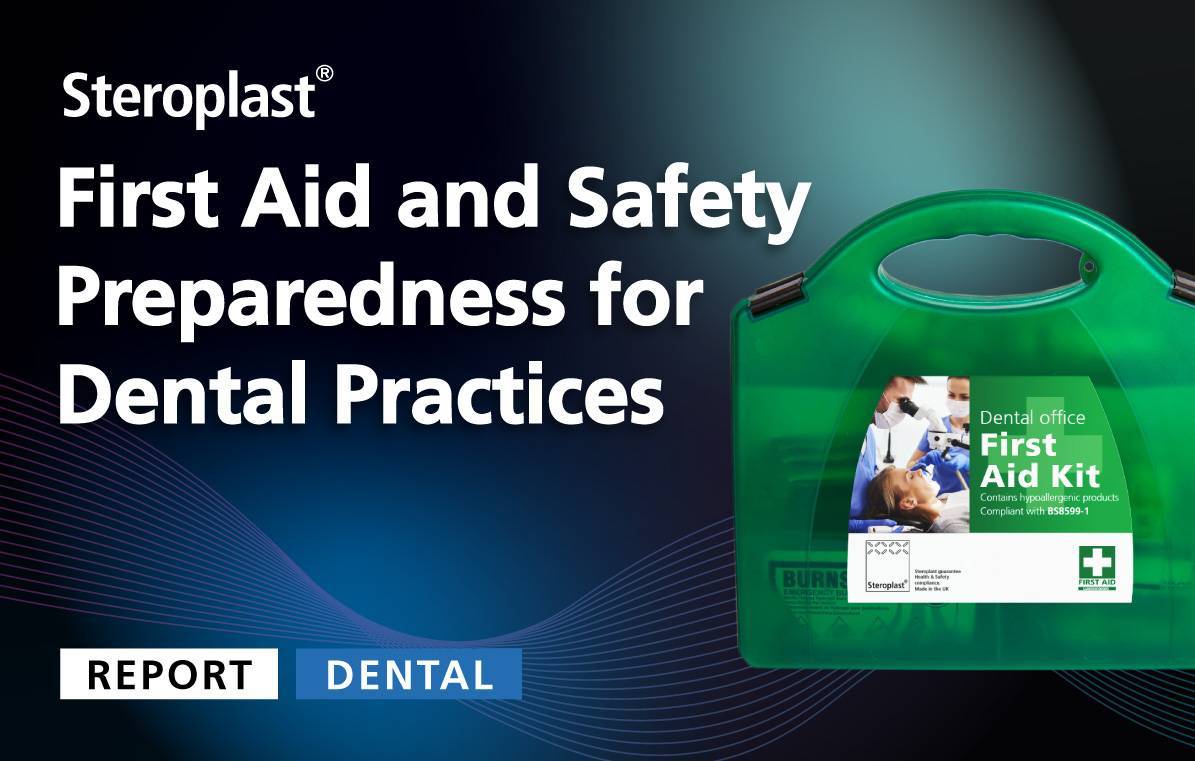
The Complete 2026 Report on First Aid and Safety Preparedness for Dental Practices
The Complete 2026 Report on First Aid and Safety Preparedness for Dental Practices
Dental practices carry a legal, moral, and professional duty to protect patients, staff, and visitors from foreseeable harm. This report provides a single, authoritative reference for meeting healthcare, first aid, health and safety, and emergency preparedness responsibilities within UK dental practice environments in 2026.
More than a compliance checklist, this is a decision-support framework that shows you what risks apply to your practice, what the law requires, and critically, what you must do to demonstrate competence.
1. Understand Your Risk Profile
Why this matters: Dental practices are high-risk clinical environments with frequent minor incidents and rare but life-threatening emergencies that attract close attention from regulators and insurers.
| Risk area | Key facts | What you must put in place |
|---|---|---|
| Faints (vasovagal syncope) | Most common dental emergency; around 86% of dentists can recognise it but lack treatment skills. | Include syncope management in medical emergency training and drills; ensure oxygen and basic airway kit are always ready. |
| Sharps injuries | ~205,000 sharps injuries per year in non-hospital healthcare; BBV transmission risk approx. HBV 30%, HCV 2%, HIV 0.3%. | Use safer sharps, robust sharps procedures, a clear post-exposure pathway, and RIDDOR reporting triggers. |
| Chemical splashes | Disinfectants, acids, bonding agents, and impression materials can damage eyes and skin. | Install eyewash or irrigation points, write a simple response protocol, and make sure all staff know it. |
| Latex allergy | Reactions range from dermatitis to anaphylaxis in staff and patients. | Switch to non-latex options where possible; screen medical histories and clearly flag latex allergies. |
| Anaphylaxis | Often linked to antibiotics, LA, or latex; up to 50% of episodes are not treated with adrenaline in healthcare settings. | Stock adrenaline 1:1000, write an anaphylaxis protocol, and rehearse use of IM adrenaline and oxygen. |
| Cardiac arrest | 50–70% survival if defibrillation is delivered within 3–5 minutes; survival drops about 10% per minute of delay. | Install an AED or document how you can reliably access one within ~3 minutes; ensure annual BLS/AED training. |
| Choking/aspiration | ~250 deaths a year in England/Wales from choking; around 60% occur in healthcare settings. | Train choking management specifically for dental instruments and materials; keep suction and basic airway kit ready. |
| Medical Conditions | Asthma, MI, seizures, hypoglycaemia. All can deteriorate quickly without early intervention. | Keep recommended emergency drugs and oxygen on site and ensure the team can use them confidently. |
2. Turn Legal Duties Into Clear Practice Actions
Why this matters: HSE, CQC, and GDC judge you on what you do and document, not just what you know.
| Law/standard | Core requirement in plain language | What you must do in practice |
|---|---|---|
| Health and Safety at Work Act 1974 | You must protect the health, safety, and welfare of staff, patients, visitors, and contractors as far as reasonably practicable. | Carry out and document a full health and safety risk assessment; review it at least annually and after any major change. |
| First Aid Regulations 1981 (amended) | You must provide suitable first aid cover, equipment, and information based on a needs assessment. | Complete a first aid needs assessment, appoint first aiders or an appointed person, and stock a suitable BS8599-1 kit. |
| GDC medical emergencies guidance | You must follow Resuscitation Council UK guidance and keep skills up to date with regular CPD. | Plan at least 2 hours verifiable CPD on medical emergencies each year (10 hours per 5-year cycle) plus annual CPR/BLS/AED training. |
| CQC Regulation 12 (Safe care and treatment) | You must have appropriate emergency drugs and equipment, keep them accessible, and check them regularly. | Store emergency kit centrally, carry out weekly checks with a log, and keep a written AED risk assessment if you do not have one on site. |
| Sharps Regulations 2013 | You must prevent sharps injuries so far as reasonably practicable and manage any incidents properly. | Use safer sharps devices, ban recapping, site sharps bins at point of use, train staff, and investigate each sharps injury with a clear response protocol. |
| HTM 01-05 | You must meet minimum decontamination standards and have a plan to reach Best Practice. | Put in place daily, weekly, and six-monthly decontamination checks, and keep written evidence of tests and corrective actions. |
| COSHH Regulations 2002 | You must control exposure to hazardous substances such as disinfectants, latex, mercury, and blood. | Maintain an up-to-date COSHH inventory, store Safety Data Sheets, complete risk assessments, and train staff in safe use and PPE. |
| Legionella L8 | You must assess and control the risk of Legionella in water systems and dental unit waterlines. | Commission or complete a Legionella risk assessment, document a flushing and monitoring routine, and arrange regular water testing as advised. |
| Fire Safety Order 2005 | You must assess fire risks and ensure you can safely evacuate everyone, including those with reduced mobility. | Complete a fire risk assessment, prepare an evacuation plan with PEEPs, run annual drills, and maintain fire alarms and extinguishers. |
| Hazardous Waste & Amalgam Rules | You must segregate clinical waste correctly and capture amalgam safely. | Install ≥95%-efficient amalgam separators, label and store waste correctly, use licensed carriers, and keep consignment notes for 3 years. |
| IR(ME)R & IRR 2017 | You must use X-ray equipment safely, with clear responsibilities and training for staff. | Register with HSE, appoint an RPA, write local rules, mark controlled areas, and ensure 5 hours relevant CPD per 5-year cycle. |
| Equality Act 2010 | You must make reasonable adjustments for disabled patients and staff. | Audit access, communication, and appointment systems; record the adjustments you offer and how staff implement them. |
| RIDDOR 2013 | You must report certain work-related incidents, diseases, and dangerous occurrences. | Nominate a RIDDOR lead, incorporate RIDDOR thresholds into your procedures, and keep copies of all reports. |
Compliance Through Documentation
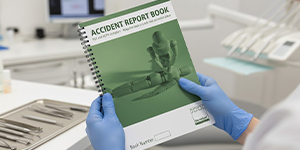
Good records demonstrate compliance and drive improvement. Accident/incident reports must be completed promptly to meet RIDDOR and CQC expectations.
Order Accident Report Book3. First Aid Provision That Stands Up to Scrutiny
Why this matters: The assessment defines the requirements of your first aid kit, staffing, and training if there is an accident or inspection. The wrong kit size or lack of first aiders is easy for an inspector to spot and hard to defend.
Work through five quick questions:
- Your workplace: How many surgeries and floors do you have, and how quickly can an ambulance reach you?
- Your people: How many staff are on duty at any one time and do any have additional health needs?
- Your hazards: What invasive procedures, sharps, chemicals, manual handling tasks, or slip/trip hazards are present?
- Your patients: Do you treat children, older people, or medically complex or sedated patients?
- Your provision: Given the above, how many first aiders do you need, and what kits and extra equipment (e.g. eyewash) are necessary?
Tip: Capture your answers in a short written document and review them annually.
Choose the Right BS8599-1 Kit and Staffing
Why this matters: The wrong kit size or lack of first aiders is easy for an inspector to spot and hard to defend.
| Workforce size | Minimum BS8599-1 kit | Minimum first aid staffing |
|---|---|---|
| Fewer than 5 employees | Small BS8599-1 kit | At least an appointed person who understands their role. |
| 5–25 employees | Medium BS8599-1 kit | At least one Emergency First Aid at Work (EFAW) trained person (6-hour course). |
| More than 25 employees | Large BS8599-1 kit per 25 employees. | At least one First Aid at Work (FAW) trained person (3-day course). |
Dental Office First Aid Kit
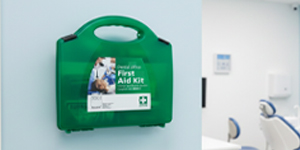
The gold standard for UK dental clinics, specifically built to exceed BS8599-1 specifications and meet all HSE/CQC quality requirements.
- Fully compliant with BS8599-1:2019 standards.
- High-quality medical components for clinical environments.
- Available as Off-Site or Motor Vehicle variants.
Practical Steps for Compliance
- Mount kits where everyone can see and reach them, using standard green/white signage and mounting stations.
- Nominate a staff member to check contents monthly and after each use, documenting this with a simple tick-sheet.
- Diary first aider certificate renewals (every 3 years) and plan annual skills refreshers to keep confidence high.
RIDDOR-Ready Accident & Sharps Protocol
Your incident paperwork is the first thing HSE or insurers will ask for after a serious accident.
Keep a bound or secure electronic accident report book and retain entries for at least 3 years.
Display RIDDOR reporting triggers where clinical staff can see them, ensuring no reportable cases are missed.
5. Emergency Drugs and Equipment You Should Have on Site
Why this matters: Regulators, defence organisations, and professional bodies all expect dental practices to hold a core set of emergency medicines to manage life-threatening situations effectively.
| Drug | Typical indication and adult dose | What you must do |
|---|---|---|
| Adrenaline 1:1000 (1 mg/ml) | Anaphylaxis; 500 micrograms IM (0.5 ml) repeated every 5 minutes if needed. | Keep adequate ampoules or pre-filled syringes; store with a dose chart; check expiry weekly. |
| Aspirin 300 mg | Suspected myocardial infarction; 300 mg chewed or dispersed. | Stock in blister packs; include in chest-pain protocol; check expiry dates regularly. |
| GTN spray 400 micrograms | Angina or chest pain; 1–2 sprays under the tongue, repeat if symptoms persist. | Store with emergency kit; record the expiry and replace before it lapses. |
| Salbutamol inhaler + spacer | Acute asthma attack; 2 puffs initially, up to 10 puffs. | Keep a dedicated practice inhaler and a compatible spacer; prime regularly and record checks. |
| Oral glucose | Conscious hypoglycaemia; 10–20 g of glucose. | Stock gel sachets or tablets; make them easy to reach in an emergency. |
| Glucagon IM 1 mg | Severe hypoglycaemia in an unconscious patient. | Store at least one kit; follow storage instructions (fridge or room temperature as stated). |
| Midazolam oromucosal | Prolonged seizures; dose depends on age. | Stock appropriate strengths for the patients you treat and keep a clear dosing guide. |
| Oxygen | Any critically unwell patient; usually 15 L/min via non-rebreather mask. | Install a CD-size cylinder or larger; ensure masks and tubing are available and intact. |
Simple Drug-Check Routine
Adherence to a strict monitoring schedule ensures life-saving medication is ready when needed.
- Check every emergency medicine at least weekly for presence, integrity, and expiry date.
- Record checks in a log with date, name of the checker, and specific actions (e.g., "Aspirin replaced").
- Replace any items that are missing, damaged, or close to expiry immediately.
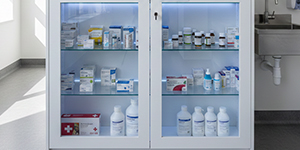
Reliable Supply for Dental Practices
Stay compliant and prepared with professional-grade emergency equipment. Browse our specialised medical supplies designed for clinical dental environments.
Shop Pharmaceutical SuppliesMake sure your resuscitation equipment is complete and ready
Why this matters: Having drugs without airway and circulation support is not enough in a true emergency.
| Equipment | Why you need it | How to keep it ready |
|---|---|---|
| PPE (gloves, aprons, eye protection) | Protects staff during emergencies, including when blood or vomit is present. | Store in the emergency bag and at each surgery; restock as part of weekly checks. |
| Pocket masks with oxygen port | Allows safer rescue breaths. | Place at least one in each surgery and one with the main emergency kit. |
| Portable suction with Yankauer tip | Clears blood, vomit, or dental materials from the airway. | Test regularly; document any issues and repairs. |
| Bag-valve mask ( adult and child ) | Delivers ventilation during CPR. | Keep assembled or easy to assemble; check valves, bags, and masks regularly. |
| Oropharyngeal airways (sizes 0–4) | Helps keep the airway open in an unresponsive patient. | Stock the full size range and include a sizing guide in the kit. |
| Non-rebreather oxygen masks | Deliver high-flow oxygen effectively. | Store adult and child masks with tubing in the same place as the cylinder. |
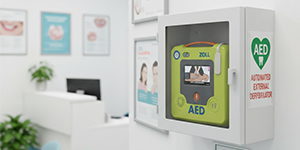
| AED with electrode pads | Treats cardiac arrest using defibrillation. | Mount in a visible, accessible location; check battery/pad status monthly and after any use. |
| Razor and trauma shears | Allow you to expose the chest quickly for pad placement. | Keep in the AED case; check that shears cut easily. |
Note: If you do not hold an AED on site, write a short risk assessment describing where the nearest public-access AED is, who will fetch it, and how quickly they can realistically return.
Choose the Right AED for Your Practice

ZOLL AED Plus (Automatic)
Offers real-time CPR feedback with clear audio and visual prompts, one-piece pads for fast placement, and long-life batteries/pads (up to 5 years).
View ZOLL AED Plus
iPAD SP1 (Semi-Automatic)
Designed for ease of use with clear voice guidance and compatibility with NHS ambulance equipment for smooth handover. Includes a 7-10 year warranty.
View iPAD SP1A full range of accessories is available, including pads, batteries, and alarmed cabinets.
Browse all AEDs and Accessories6. Infection Control and Sharps Safety That Match HTM 01-05
Why this matters: Sharps injuries are common, preventable, and critical to health and safety, infection control, and RIDDOR compliance.
- Choose safer sharps devices (retractable or shielded needles) wherever suitable, and use conventional devices only when justified.
- Enforce a strict no-recapping rule for needles and integrate this into all staff training and supervision.
- Site BS-compliant sharps bins at the point of use and in decontamination areas.
- Close and label bins when three-quarters full and arrange prompt collection.
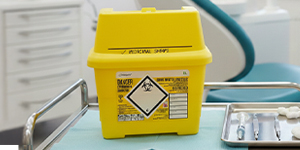
Optimise Disposal for Safety
Ensure the safe and efficient disposal of needles, blades, and other sharps to reduce injury risks and comply with waste management regulations.
Sharps Injury Response Protocol
Every clinical room must display a simple checklist staff can follow immediately without hesitation.
- Stop the procedure and move safely away.
- Encourage bleeding under running water (do not scrub or squeeze).
- Wash with soap and water, dry, and cover the wound.
- Report incident to the named lead immediately.
- Seek medical advice within one hour (OH, A&E, or GP); consider HIV PEP and Hepatitis B prophylaxis.
- Record in the accident book and sharps log.
- If BBV-contaminated, alert the RIDDOR lead for potential reporting.
Professional Grade Protection
Nitrile gloves offer high resistance to punctures and chemicals, essential for dental procedures.
HTM 01-05 Decontamination Timetable
HTM 01-05 defines exactly what "good" looks like in primary dental care.
| Frequency | What you should do | Evidence you should keep |
|---|---|---|
| Daily | Run/record autoclave steam penetration; flush DUWLs at start of day and between patients. | Signed printed or electronic logs, plus records of corrective actions. |
| Weekly | Visually inspect decontamination equipment for damage or malfunction. | Brief weekly checklist noting pass/fail and actions taken. |
| Six-monthly | Complete full infection-control audit against HTM 01-05 structured tool. | Audit report, action plan, and evidence of completion. |
| Annually | Arrange autoclave/washer-disinfector servicing by a competent engineer. | Service reports and validation certificates filed in compliance folder. |
Pro Tip: Combine this with your Legionella plan, including regular temperature checks and water quality testing as recommended in your risk assessment.
8. Fire Safety and Evacuation That Work in Real Life
Why this matters: Dental premises are workplaces and public-facing healthcare settings, so fire authorities expect a sound, written assessment.
Your Assessment Should:
- Identify likely ignition sources, fuel loads, and oxygen-rich areas (for example, where oxygen cylinders are stored).
- Identify people who might need extra help to escape, including wheelchair users and those under sedation.
- Set out how you will reduce fire risk (for example, PAT testing, safe oxygen storage, housekeeping).
- Record your findings and any improvements in a form that you can quickly show to inspectors.
- Be reviewed at least annually or whenever your layout, equipment, or staffing changes significantly.
Evacuation Plans and PEEPs
Why this matters: In a real fire, you must be able to get everyone out quickly without confusion.
Your Plan Essentials
- How staff will raise the alarm and call the fire service.
- Which routes staff and patients should use and where they should assemble outside.
- Who checks rooms and toilets if it is safe to do so, and who acts as a fire marshal.
- How PEEPs (Personal Emergency Evacuation Plans) will work in practice for anyone who cannot use stairs or move quickly.
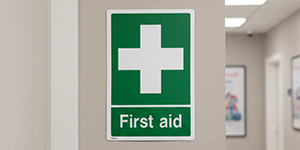
Practise Makes Prepared
Run at least one fire drill per year, record how long it took, note any issues, and record the actions you took to fix them. Ensure your assembly points are clearly marked with professional safety signage.
View Safety SignageDon't forget to include foil/thermal blankets in your evacuation grab-bag for patients evacuated in shock or cold weather.
9. Training, Competence, and Records Inspectors Want to See
Why this matters: GDC requires regular, verifiable CPD in this area, and CQC expects evidence that the whole team is competent and capable of responding to clinical emergencies.
Training Priorities
- Book in-house or external training covering practical BLS, AED use, oxygen, and BVM assembly.
- Ensure training addresses the specific management of key dental emergencies (e.g., syncope, anaphylaxis).
- Keep certificates and attendance lists for every course in your compliance folder.
- Tie formal training to your quarterly emergency drills for maximum team impact and skill retention.
The Training Matrix: Visual Compliance
Why this matters: When inspectors ask “Who is trained, in what, and when does it expire?”, you should be able to answer instantly with a single document.
| Core Subject | Applicable Staff | Key Compliance Data |
|---|---|---|
| Medical Emergencies & BLS/AED | Full Clinical & Support Team | Annual update; Verifiable CPD hours. |
| Infection Control (HTM 01-05) | Full Clinical Team | Cycle-based updates; Audit involvement. |
| Radiography & IR(ME)R | Operators & Practitioners | 5 hours per 5-year cycle. |
| Safety & Compliance | All Staff | Fire Safety, Sharps, COSHH, Safeguarding. |
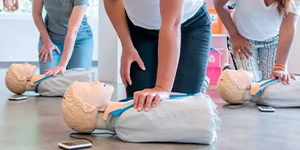
Enhance Your Practical Training
Investing in professional training equipment allows for frequent, high-fidelity practice sessions that build genuine team confidence.
Compliance Tip: Record course dates, providers, and renewal dates on your matrix and review it monthly so training never lapses.
10. Maintenance, Audits, and Documentation That Tie Everything Together
Why this matters: A short, consistent check routine prevents unpleasant surprises when you need the kit most.
Weekly Essential Checks
- Emergency drugs: present, in date, intact, and stored correctly.
- Oxygen: cylinder pressure adequate, regulator and flow checked.
- AED: status indicator OK, pads present and in date, and all accessories in place.
- Suction: works properly with adequate suction at the tip.
- First aid kit: fully stocked with in-date items only.
Action: Put core audits into an annual calendar
Why this matters: Audits should be routine, not a last-minute scramble before an inspection.
| Audit Frequency | Compliance Focus |
|---|---|
| Six-monthly | HTM 01-05 infection-control audits with documented action plans. |
| Quarterly | Record-keeping audits for consent, medical history, and IR(ME)R compliance. |
| Annually | Radiography, prescribing, and patient-experience audits. |
The Central Compliance Folder
In any inspection or complaint, you must be able to present your policies and evidence of safety instantly.
- Health & Safety, Infection Control, Waste, & Radiation.
- Risk Assessments: General H&S, Fire, Legionella, & COSHH.
- Accident books, training records, and RIDDOR reports.
- Decontamination tests, waste consignment notes, and insurance.
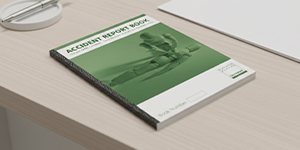
Demonstrate Compliance Instantly
Maintain flawless records for every incident and check with professional accident report books and logging systems.
Order Accident Report Books11. CQC Inspection and Future-Proofing
Why this matters: CQC looks at whether your service is safe, effective, caring, responsive, and well-led. Being able to demonstrate compliance through organized documentation is the cornerstone of a successful inspection.
Evidence Mapping Strategy
Prepare a short summary showing which documents and records support each area, with a particular focus on the "Safe" and "Well-led" domains:
Evidence of equipment checks, sharps safety, infection control audits, and emergency drug logs.
Training matrices, clear governance folders, RIDDOR leads, and evidence of acting on audit findings.
Use Supplier Relationships to Stay Up to Date
Why this matters: Regulations and best practices evolve rapidly. Your suppliers and professional bodies are essential resources for maintaining peak compliance without the guesswork.
- Stay Informed: Sign up for updates and clinical resources from your healthcare suppliers, indemnity provider, and professional bodies.
- Review Alerts: Regularly review email alerts and product updates in light of your existing policies and risk assessments.
- Evolution: When guidance changes, update your protocols, training schedules, and equipment lists accordingly to ensure you never fall behind.
Your Partner in Compliance
At Steroplast, we don't just provide equipment; we provide the peace of mind that comes with high-quality, regulated supplies designed for the rigours of modern dentistry.
About Steroplast12. What to Do This Month
Use this as your immediate action list:
| 1 | Complete or update your first aid needs assessment and confirm your BS8599-1 kit size and first aid cover. |
| 2 | Check your emergency medicines and resuscitation equipment against the lists above and order anything missing or out of date. |
| 3 | Decide on AED provision; if you do not have one, complete a written risk assessment and seriously consider installing one. |
| 4 | Run at least one medical emergency drill and one fire drill, and record both with learning points and actions. |
| 5 | Set up weekly emergency equipment checks using a simple checklist and start completing it. |
| 6 | Review your sharps injury protocol and display step-by-step posters in all clinical areas. |
| 7 | Confirm your HTM 01-05 routines, Legionella plan, and infection-control audit schedule are current and documented. |
| 8 | Update your training matrix and book any overdue or soon-to-expire courses. |
| 9 | Organise your compliance folder so you can find key policies, risk assessments, and logs within seconds. |
| 10 | Share this guide with your team and assign named leads for each action area so nothing gets missed. |
