Warehouse Signage and First Aid: UK Legislation Business Owners Need to Know
Warehouses are classed as high-risk environments when it comes to health and safety. This is because of the nature of work carried out on-site, which often includes machinery use, electricity, potentially harmful temperatures, hazardous materials, and busy areas.
Workplaces in the UK must follow certain rules regarding the provision of first aid and first aid signage set out in two pieces of legislation:
- The Health and Safety (First-Aid) Regulations 1981
- The Health and Safety (Safety Signs and Signals) Regulations 1996
The First Aid Regulations 1981 require that:
An employer shall provide, or ensure that there are provided, such equipment and facilities as are adequate and appropriate in the circumstances for enabling first-aid to be rendered to his employees if they are injured or become ill at work.
Your warehouse's exact first aid requirements will be determined by your first aid risk assessment (following The Management of Health and Safety at Work Regulations 1999).
The Safety Signs and Signals Regulations 1996 require that:
Safety signs are provided (or are in place) and maintained in circumstances where there is a significant risk to health and safety that has not been removed or controlled by other methods. This is only appropriate where use of a sign can further reduce the risk.
Warehouse First Aid Requirements
When the assessment of first-aid requirements has been completed, the employer should provide the materials, equipment and facilities needed to make sure that the level of cover identified as necessary will be available to employees at all relevant times. This will include ensuring that first-aid equipment, suitably marked and easily accessible, is available in all places where working conditions require it.
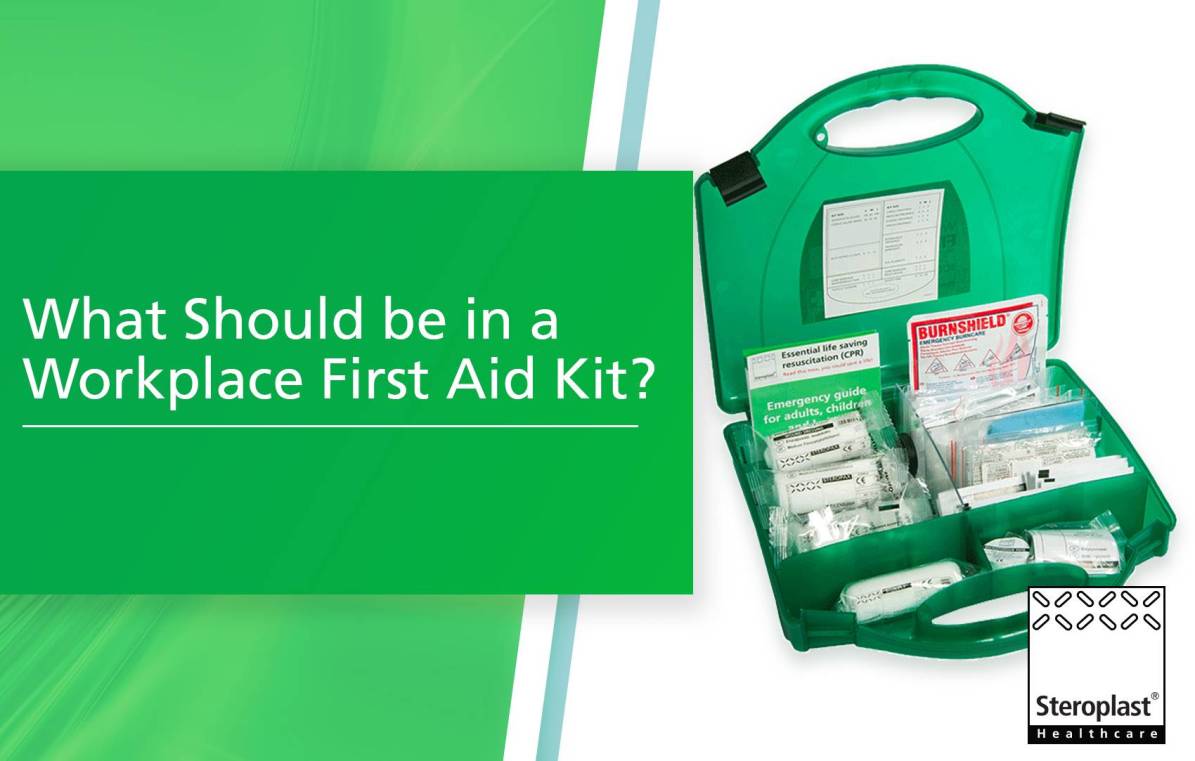
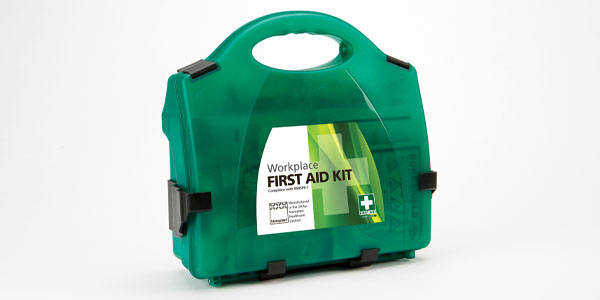
The first aid regulations state that the minimum level of equipment should be one fully stocked first aid kit in a properly identifiable container, with contents suitable for the particular risks of that environment. They also specify that more than one first aid kit may be required for larger sites.
The First Aid Kit
First-aid containers should be easily accessible and preferably placed near to hand-washing facilities.
HSE sets out no legal list of first aid kit contents. However, the British Standards Institute (BSI), the national standards body for the UK responsible for certifying safety and quality, offers a recommended standard that first aid kits should meet: BS 8599-1:2019.
BS 8599-1:2019 is a certification that means the contents of a workplace first aid kit meet specific standards deemed the minimum necessary by BSI to provide effective first aid. As a responsible business owner, this is the minimum you should provide to ensure your workforce is supported and your business is protected.
Depending on the outcome of your needs assessment, you may require additional first aid provisions outside of the usual workplace first aid kit. Follow the guidance on page 8 of the HSE First Aid at Work Guide Book to help you determine what risks are present on your premises.
Some typical additional first aid kits we recommend for workplaces are:
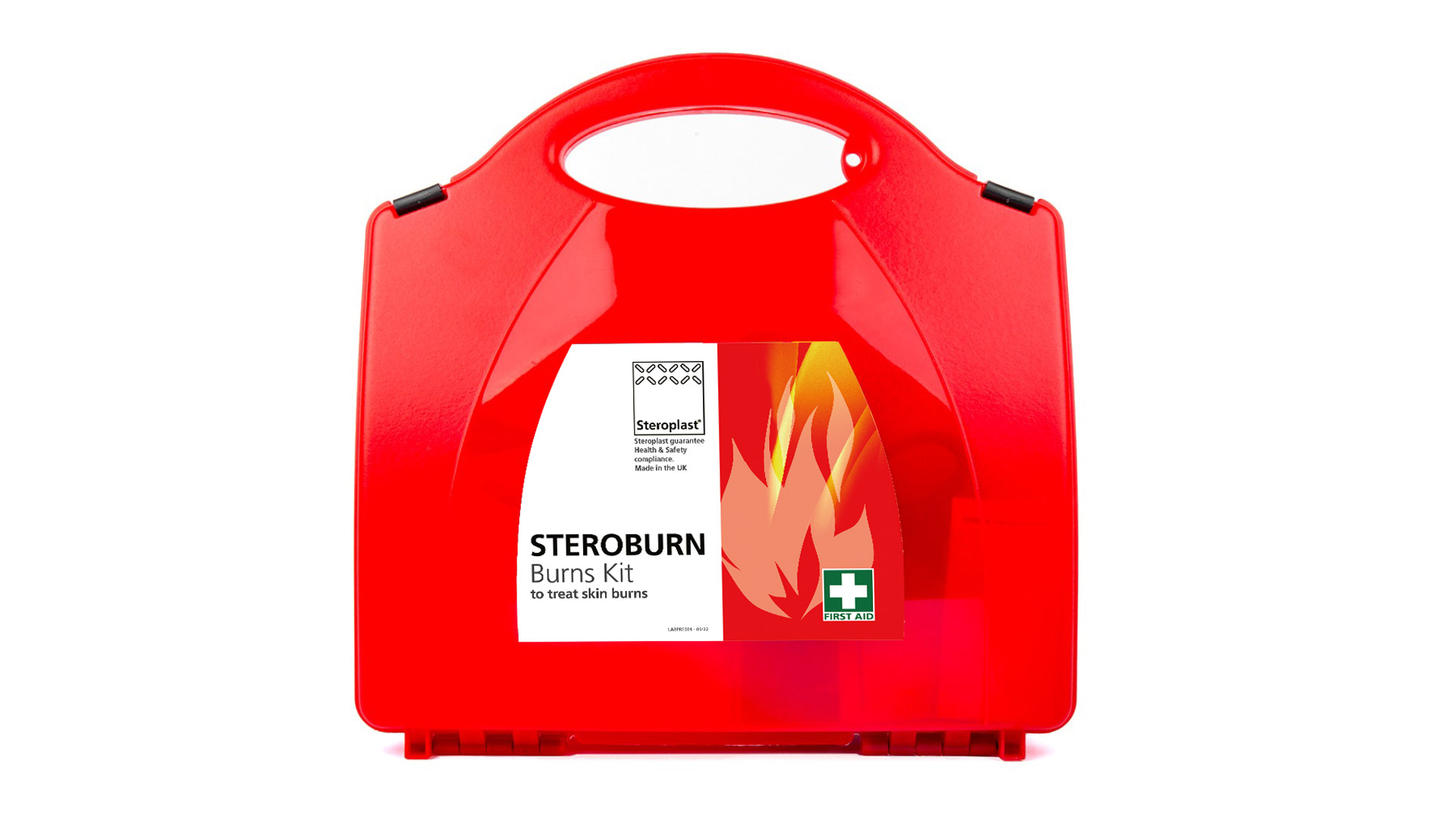
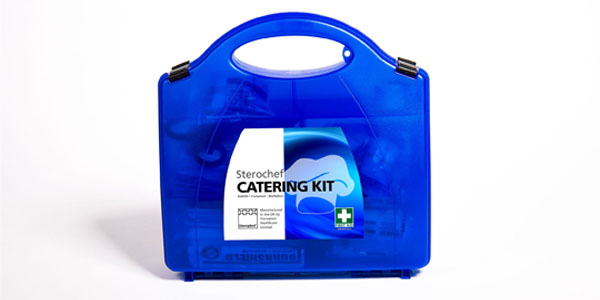
Eyewash Stations
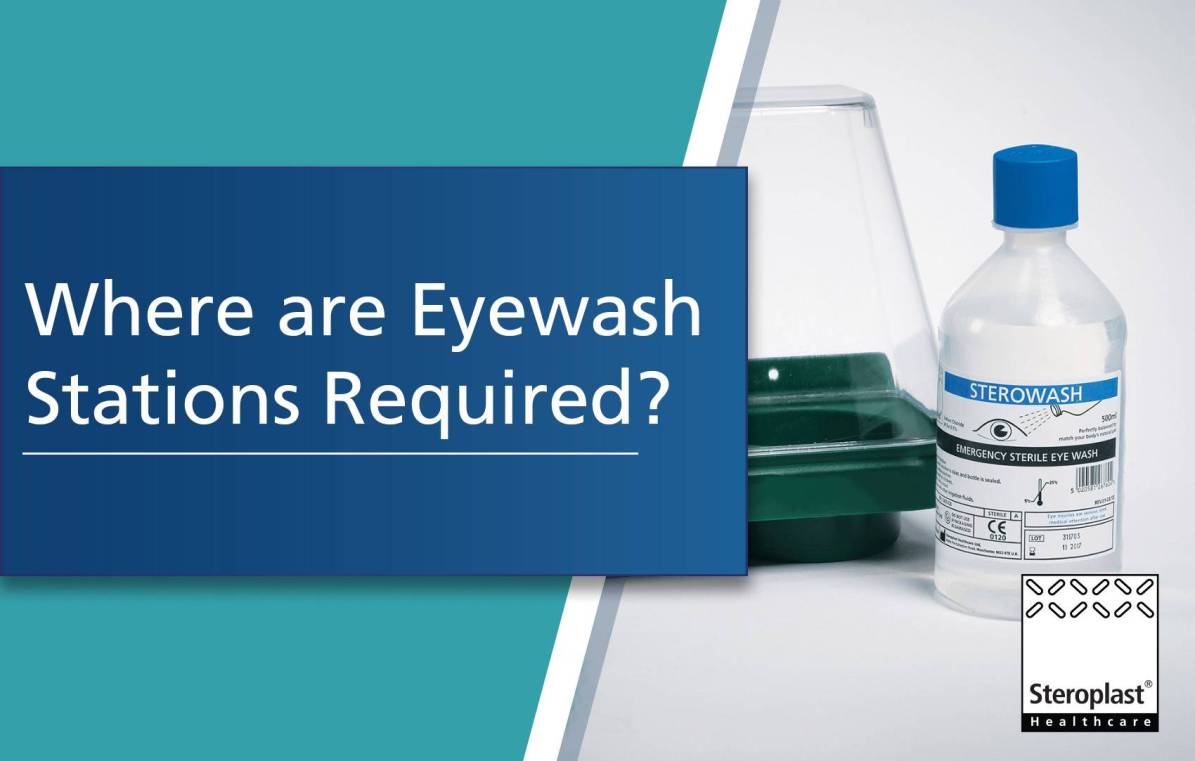
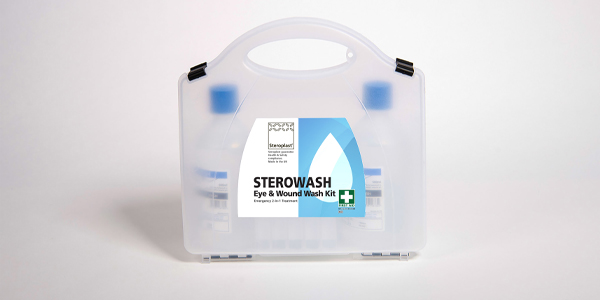
If mains tap water is not readily available for eye irrigation, at least one litre of sterile water or sterile normal saline (0.9% w/v) in sealed, disposable containers should be provided. Once the seal has been broken, containers should not be kept for reuse. Containers should not be used beyond their expiry date.
The three main risks that lead to eye injury are heat, chemicals, and machinery. Because of this, warehouse operations almost always present a heightened risk of eye injury, and it’s likely your risk assessment will determine that you need to offer eye first aid provisions.
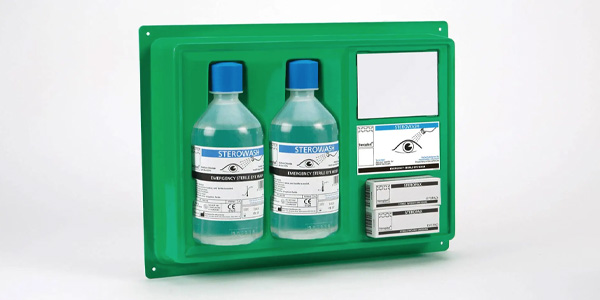
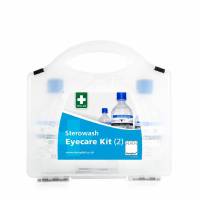
This unit includes the required amount of eyewash solution in sealed, sterile bottles, a shatter-proof mirror, instructions for use, and eye pad dressings. The signature green colour helps to identify it as a first aid station.
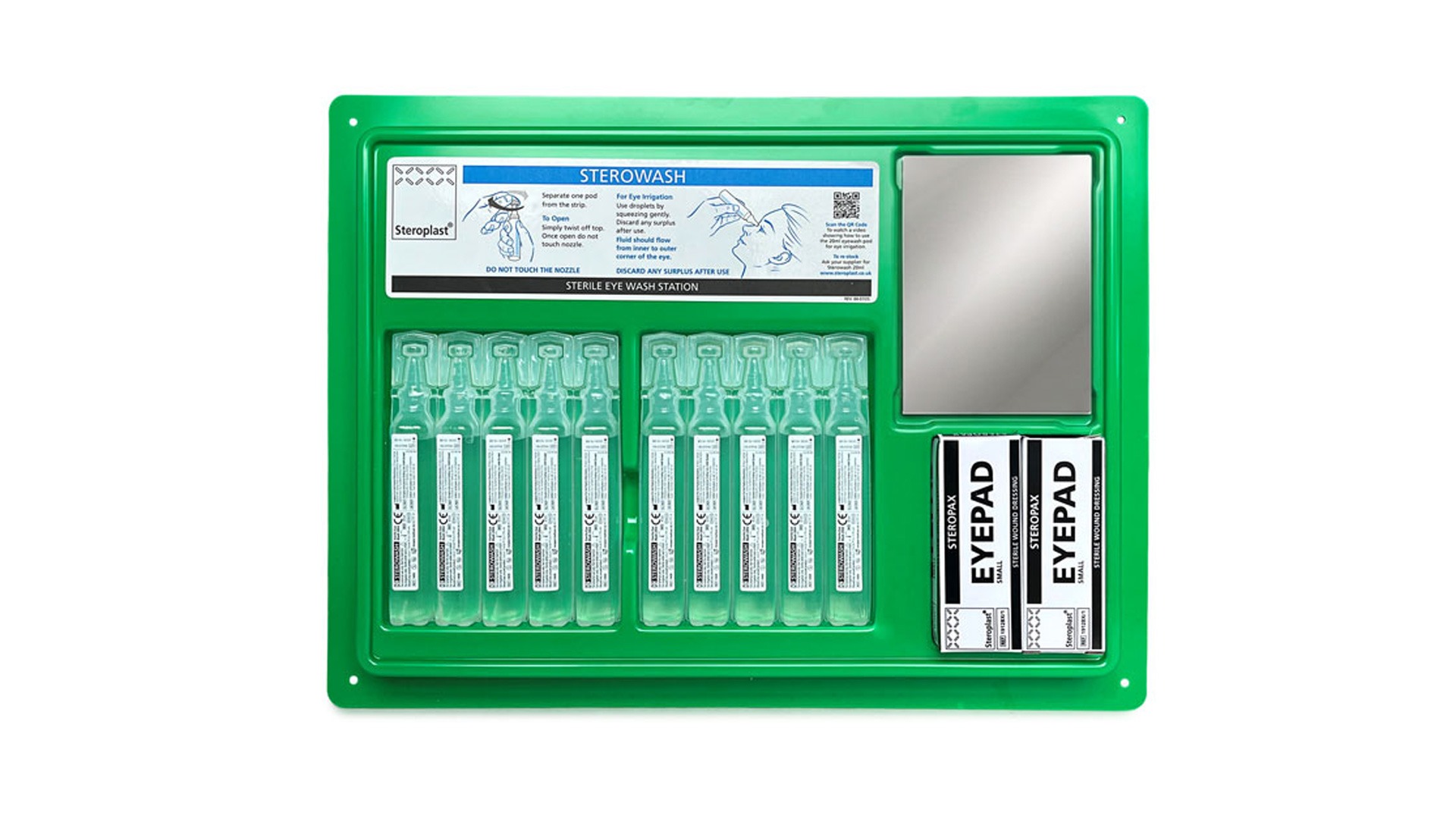
For environments where the risk of eye injury is less, this 20ml ampoule station may be a better solution. The station contains the required amount of eyewash solution but in individual 20ml pods. This means less waste is produced if you only need to use a small amount of eyewash rather than opening a 500ml bottle.
Other Life Saving Equipment
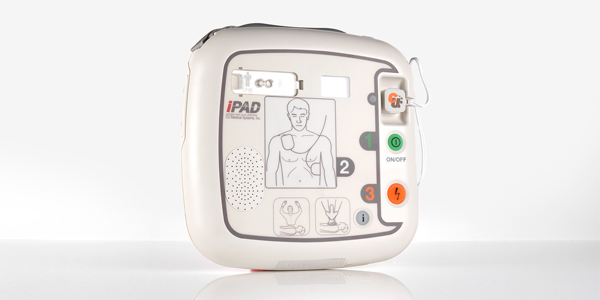
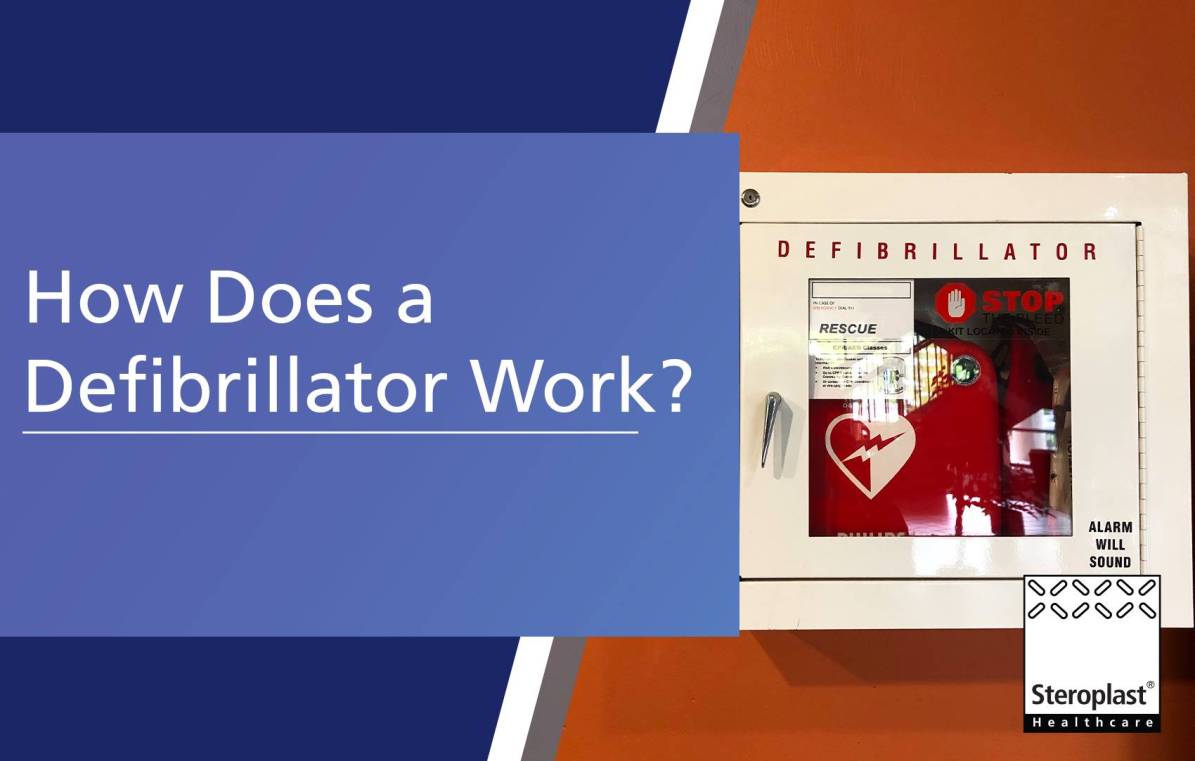
Defibrillators are not compulsory for all workplaces unless your risk assessment highlights the specific need for one. In warehouses, people can be at a heightened risk of cardiac arrest due to factors such as increased physical exertion and exposure to electricity.
However, as cardiac arrest can claim a life in just ten minutes, and with the need for a defibrillator to recover at all, businesses of all kinds have taken on the responsibility of providing a defibrillator on their premises.
This small action could save the life of one of your employees or help you assist a member of the public in need. If you do choose to install a defibrillator, the first aid regulations recommend that the employer should provide information and written instructions, for example from the manufacturer of the AED, on how to use it. Fuller training, however, is likely to make the user more confident.
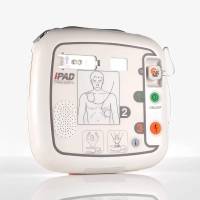
The iPAD-SP1 Semi-Automatic Defibrillator comes with visual instructions and verbal prompts to clearly assist even untrained individuals in its use. Don’t forget to register your defibrillator on The Circuit so that it can be located by ambulance services when someone calls 999.
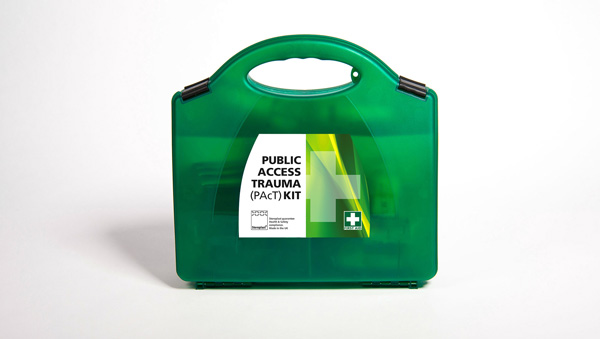
The public access trauma first aid kit was introduced by National Counter Terrorism Security Office and the UK government to give members of the public access to first aid provisions in the event of a terrorist attack. The kit contains essential items to deal with severe trauma and heavy blood loss until a paramedic can attend.
While the PAcT kit isn’t a legal requirement, like defibrillators, many businesses choose to install PAcT kits to have the peace of mind they bring, knowing that if the worst happens, their staff and people on the premises have access to a first aid lifeline.
Simplify Workplace First Aid
Interactive Online Guide & Downloadable Brochure
Simplify Workplace First Aid
Interactive Online Guide & Downloadable Brochure
Choose the format that works for you: check out our Workplace First Aid Interactive Online Guide or download our 2-in-1 Workplace First Aid & Advanced Life Support Buyers Guide as an easy-to-save PDF. Both include a self-assessment, product details, and comprehensive training and support.
Warehouse Signage Requirements
The safety signs and signals regulations require that all signs pertaining to emergency escape or first aid must be:
(a) rectangular or square shape;
(b) white pictogram on a green background (the green part to take up at least
50% of the area of the sign).
Let's look at what business owners need to consider for warehouse health and safety signs.
The First Aid Room
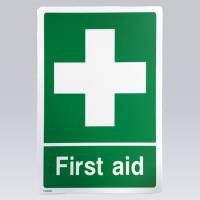
If a first aid room is provided, it must be sign-posted, and any such sign to comply with regulation 4 of the Health and Safety (Safety Signs and Signals) Regulations 1996 as if it were provided in accordance with that regulation. The first aid room must be clearly signposted and identified by white lettering or symbols on a green background.
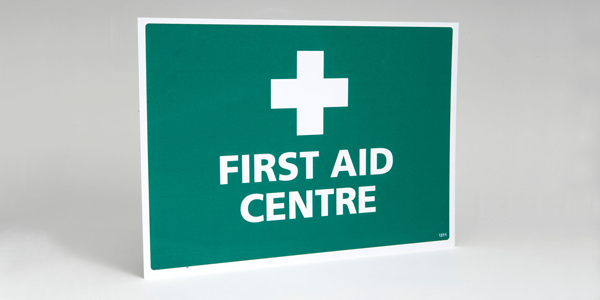
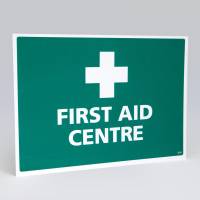
These warehouse safety signs clearly read ‘First Aid Centre’ and can be placed next to a first aid room entrance.

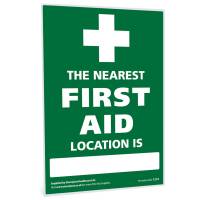
To help direct people towards the first aid room, use this sign that employs the same white cross on a green background with space to write where your first aid room can be found.
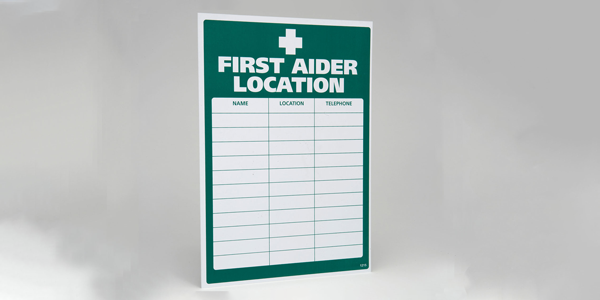
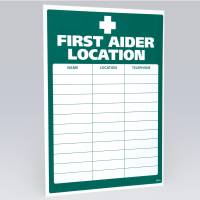
Provide clear directions to help people locate your appointed first aiders using this sign which shows names, locations, and contact numbers for up to 11 people.
Visit our
Personal First Aid Online Guide
Find everything you need, from first aid kits, plasters & bandages to hot & cold therapy.
First Aid Kit Stations

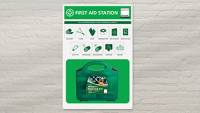
Your first aid kits must be visible and accessible to help responders locate them quickly in a crisis. The best way to ensure this is with good warehouse safety signage, like a first aid kit station.
- Our stations use colours to clearly display what type of kit is on the board.
- The kits are secured to the station via brackets that keep them out of harm's way and make them easy to remove instantly.
- Some of the stations feature intelligently designed instructions to help even untrained responders deliver first aid.
We can customise our Steroplast First Aid Kit Stations depending on your business's first aid kit needs. We can even put your branding on them for better identification. Contact us to find out more.
The first aid regulations also recommend that the needs assessment may indicate that additional materials and equipment are required, for example foil blankets, haemostatic dressings, tourniquets, disposable aprons and individually wrapped moist wipes. They may be kept in the first-aid container if there is room, or stored separately.
This is quite likely to be the case in high-risk environments like warehouses. If you need to store extra first aid equipment on-site, make sure it is easily accessible and signposted by using additional first aid signs.

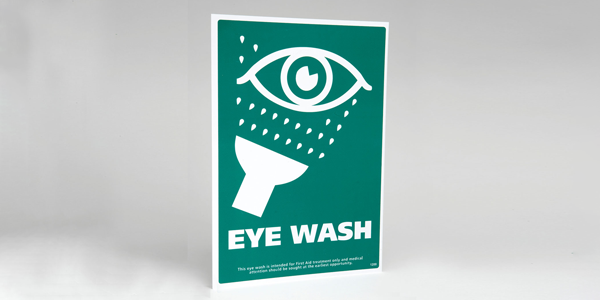
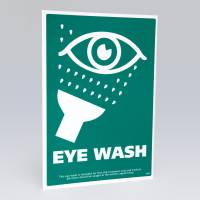
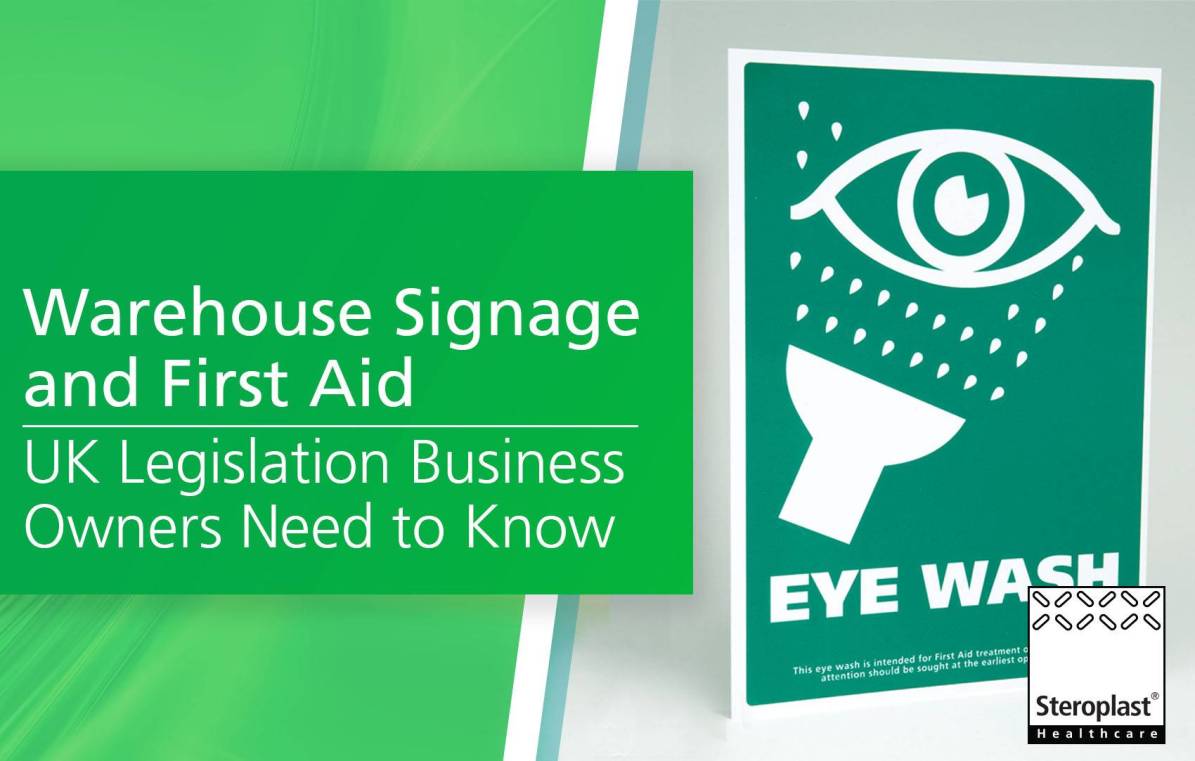
Use an eyewash station sign to show the location of your eye wash station. This sign is in the required green and white colours to help people clearly and quickly identify it as a first aid sign. If the room with the eyewash station has larger machinery or equipment in it, it might be a good idea to place the eyewash station sign a little higher up on the wall, so it’s visible from a distance.
Other Useful Guides
Besides the mandatory warehouse safety signs, training is an essential part of any first aid provision in the workplace. Reinforce training with signage that shows your workforce how to carry out crucial first aid procedures. We recommend the CPR Essential Life Saving Resuscitation Sign and Eye Wash Guidance Sign, which show clear instructions with visual prompts.
Installing these signs in spots where staff linger, such as the cafeteria, in lifts, or waiting rooms, is the best way to catch opportunities to allow them to absorb the information. You might also choose to put these signs up close to your first aid stations.
Please enter your details into the form below along with any questions or comments and a member of our team will be happy to provide you with more information: