
A Surgical Instruments List With Names and Uses
As a surgeon or surgeon’s assistant, it’s important to know the names and uses of all the different surgical instruments. So if you’re studying for your MRCS exam, here’s a handy guide to general surgical instruments with names to help you study.
Learn surgical instruments with the help of our expert knowledge hub. We also cover study guides for how to hold surgical instruments and correct decontamination and sterilisation processes.
Different Types of Surgical Instruments
So how many surgical instruments are there? Hundreds of different surgical instruments are used in theatre for highly specified uses. General surgical instruments with names and uses are categorised as follows.
Use these five categories for differentiating surgical instruments by their application.
Cutting Tools
Instruments, including scissors, blades, knives, scalpels, saws, and cautery devices, are classed as cutting tools. Cutting tools are used to make incisions and sever muscle, tendon, cartilage, bone, vessels, and other connecting tissues.
Scalpels are categorised by size, whereas scissors range from heavy-duty to cut through firm tissue and even bone to small, curved scissors used in neurosurgical procedures to make tiny cuts without disturbing the surrounding tissue.
Saws are used to cut through substantial bone in amputations and procedures such as those to access the chest cavity.
Grasping Tools
Grasping tools commonly include forceps, tweezers, and clamps. Grasping instruments are used to hold items. Grasping tools may be used to grasp organic tissue such as skin, bone, and organ tissue to manipulate, hold it in place, or reveal and access areas beneath. These tools can also be used to hold inorganic materials like surgical towels, sponges, and needles.
Forceps are among the most common types of grasping tools. They typically come in a few different categories: thumb forceps, which are squeezed to open and used for applying and removing dressings and tying sutures. Reverse forceps are squeezed to close rather than open, offering unified tension and greater precision for some tasks.
Ratcheted forceps come with step-locking features designed to hold them closed at varying intervals. Non-ratcheted forceps do not have this feature and need to be consistently squeezed by the holder.
Haemostatic Instruments
Haemostatic instruments are used to control and cease bleeding, such as Sawtell and Dunhills forceps. Electrical cautery equipment is also used to cauterise and cease bleeding and close off wounds. Sutures are another method of achieving haemostasis and are usually used with a needle and needle holder.
Retractors
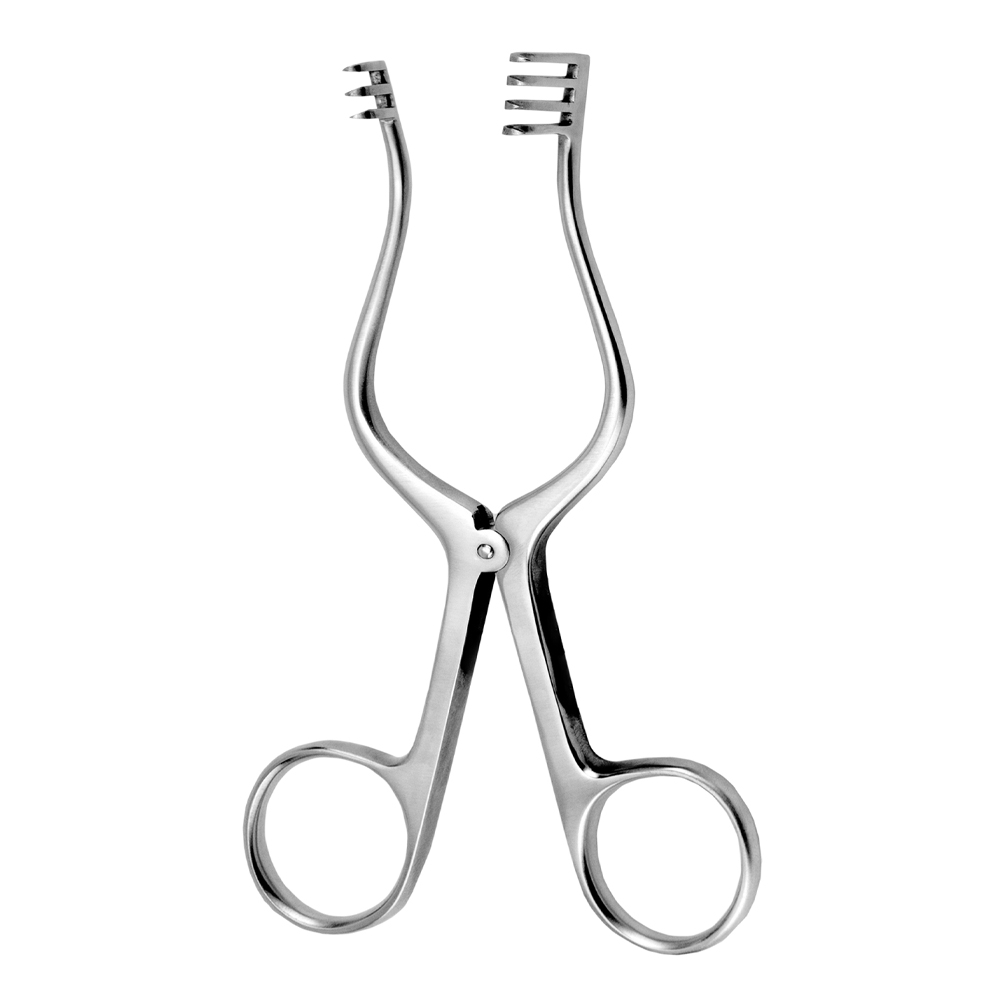
Retractors can be used to hold a wound or incision open for better visibility of the workspace or to pull tissue or organs back to reveal areas below. Retractors will generally be categorised as either self-retaining or non-self-retaining, where self-retaining retractors can hold themselves open at varying internals. The latter must be constantly held open by the holder.
Tissue Unifying Tools
Tools and instruments such as needles, needle holders, clips, sutures, surgical tape, staplers, and cauterisers are all classed as tissue unifying. These can be used to bind tissues together, such as skin, bone, cartilage, muscle, tendon, and other types of membranes.
We cover surgical tools for human applications in this article, but there are lots of similarities between human-based surgical instruments and their uses and common veterinary surgical instruments.
Simplify Workplace First Aid
Interactive Online Guide & Downloadable Brochure
Simplify Workplace First Aid
Interactive Online Guide & Downloadable Brochure
Choose the format that works for you: check out our Workplace First Aid Interactive Online Guide or download our 2-in-1 Workplace First Aid & Advanced Life Support Buyers Guide as an easy-to-save PDF. Both include a self-assessment, product details, and comprehensive training and support.
A Surgical Instruments List
See the breakdown below for a surgical instruments list with pictures organised by types of surgical instruments. There are so many surgical instruments in use in modern surgery, so we’ve focused on an extensive list of basic surgical instruments, pictures and names.
Ratcheted Forceps
Grasping instruments with a step-locking feature that means they can be locked closed at different internals.
Click to expand:
Description:
Toothed forceps.
Use:
Grasping firm, dense tissues like fascia.

Description:
Jawed, smooth-ended forceps.
Use:
Grasping delicate tissues, like bowel tissue, without damaging it.

Description:
Small forceps with a serrated curved edge.
Use:
Grasping vessels, sutures, and tissues for ligation. Also used to clamp blood vessels shut.

Description:
Forceps with interlocking teeth.
Use:
Grasping firm, dense tissue like cartilage.

Description:
Forceps with blunt-ended teeth.
Use:
Grasping slippery but firm tissues.

Description:
Curved, long serrated-ended forceps.
Use:
Grasping and tissues during procedures like tonsillectomies and clamping vessels before ligation.

Non-Ratcheted Forceps
Grasping instruments without any step-locking features.
Click to expand:
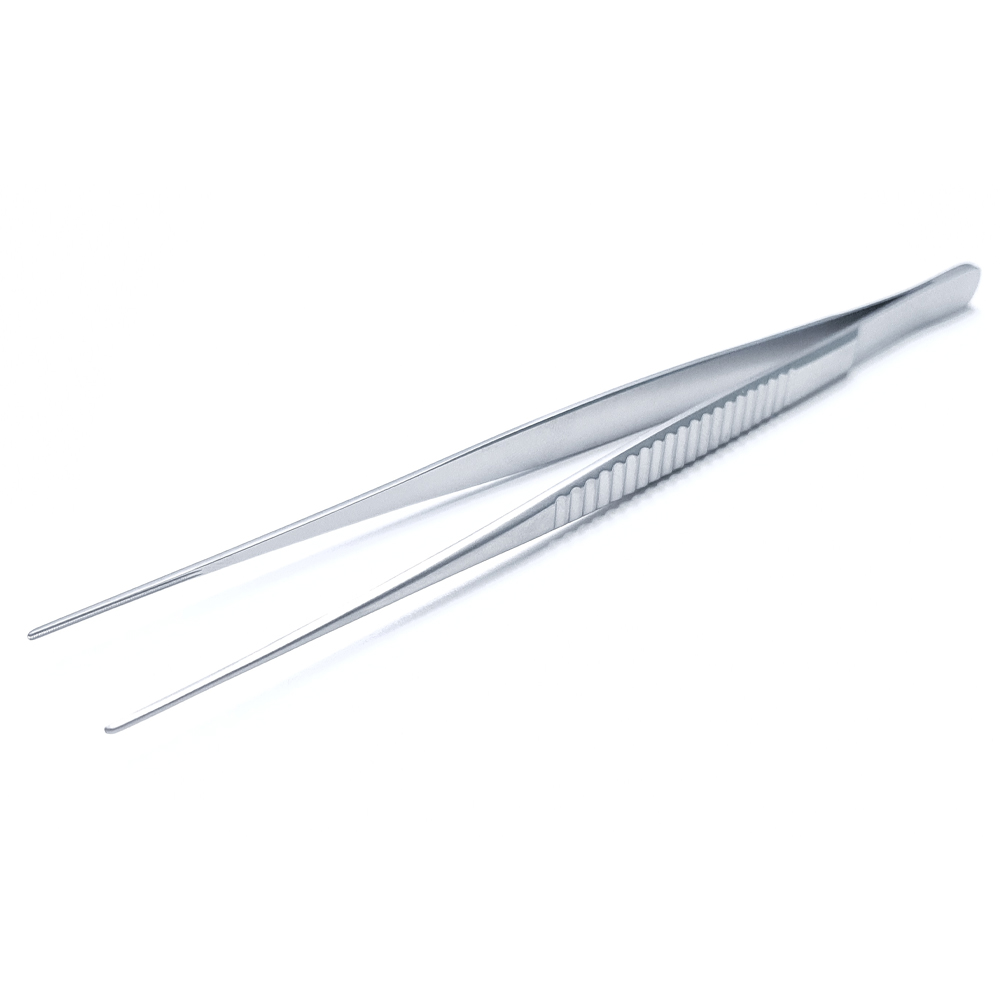
Description:
Non-toothed tweezer-like forceps.
Use:
Grasping tissues without causing damage, such as bowel tissue.
Description:
Toothed, tweezer-like forceps.
Use:
Widely used in surgery to grasp many different kinds of tissues (but not the bowel).

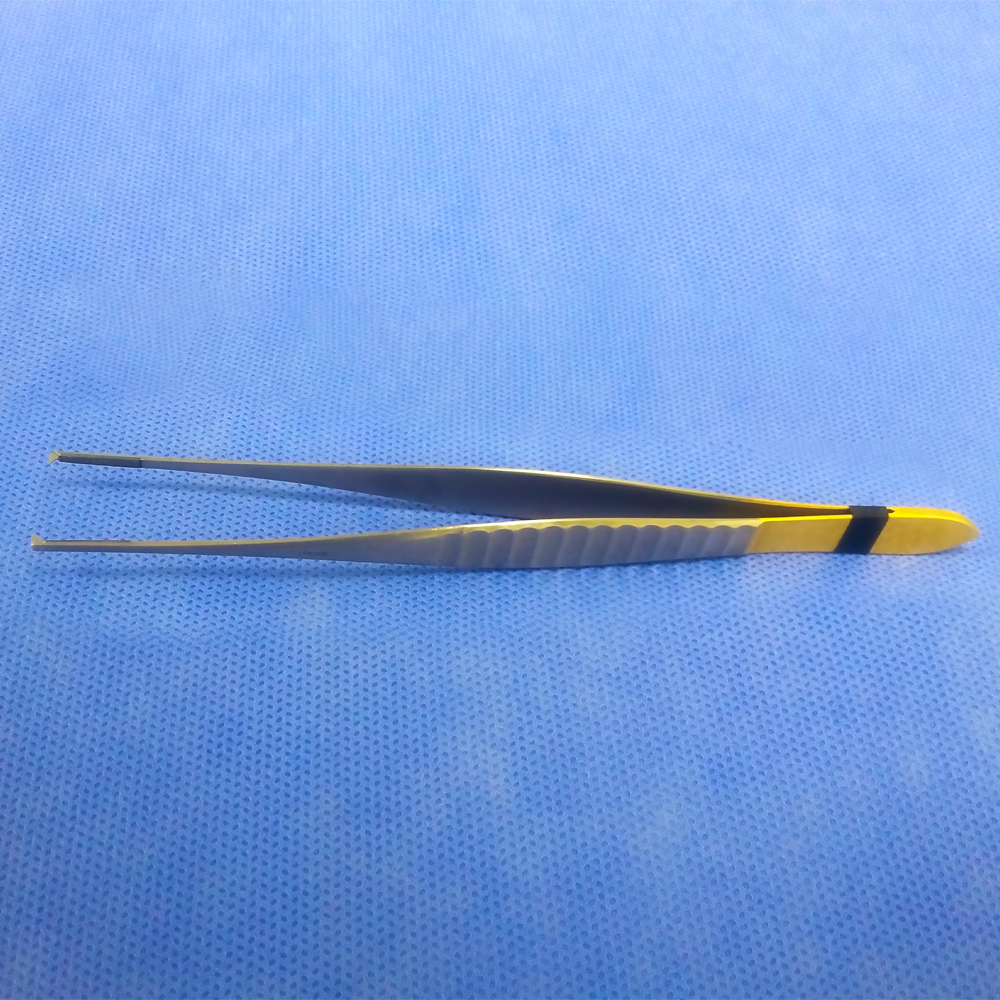
Description:
Toothed, narrow, tweezer-like forceps.
Use:
Grasping skin and other tissues.
Scissors
Shearing, hinged tools used to cut.
Click to expand:
Description:
Heavy-duty, semi-blunt scissors, either curved or straight-edged.
Use:
Cutting thick tissues and sutures.

Description:
Scissors with a small curved blade and long handles.
Use:
Cutting and dissecting tissues.

Retractors
Instruments to aid exposure by holding cavities open or holding tissues back to expose underlying areas.
Click to expand:
Description:
An L-tipped hook-shaped retractor in varying sizes.
Use:
Separating the edges of wounds and incisions.

Description:
A self-retaining retractor with blunt ends to mitigate the risk of iatrogenic tissue injury.
Use:
Enlarging surgical fields such as in neurosurgical, cardiovascular, and orthopaedic procedures.
Description:
A short-ended, self-retaining retractor.
Use:
Separating the edges of small wounds and incisions.
Download a surgical instruments pictures and names PDF here to print out and help you study.
Download general surgical instruments pdf
Please enter your details into the form below along with any questions or comments and a member of our team will be happy to provide you with more information:
As a surgeon or surgeon’s assistant, it’s important to know the names and uses of all the different surgical instruments. So if you’re studying for your MRCS exam, here’s a handy guide to general surgical instruments with names to help you study.
Learn surgical instruments with the help of our expert knowledge hub. We also cover study guides for how to hold surgical instruments and correct decontamination and sterilisation processes.
Different Types of Surgical Instruments
So how many surgical instruments are there? Hundreds of different surgical instruments are used in theatre for highly specified uses. General surgical instruments with names and uses are categorised as follows.
Use these five categories for differentiating surgical instruments by their application.
Cutting Tools
Instruments, including scissors, blades, knives, scalpels, saws, and cautery devices, are classed as cutting tools. Cutting tools are used to make incisions and sever muscle, tendon, cartilage, bone, vessels, and other connecting tissues.
Scalpels are categorised by size, whereas scissors range from heavy-duty to cut through firm tissue and even bone to small, curved scissors used in neurosurgical procedures to make tiny cuts without disturbing the surrounding tissue.
Saws are used to cut through substantial bone in amputations and procedures such as those to access the chest cavity.
Grasping Tools
Grasping tools commonly include forceps, tweezers, and clamps. Grasping instruments are used to hold items. Grasping tools may be used to grasp organic tissue such as skin, bone, and organ tissue to manipulate, hold it in place, or reveal and access areas beneath. These tools can also be used to hold inorganic materials like surgical towels, sponges, and needles.
Forceps are among the most common types of grasping tools. They typically come in a few different categories: thumb forceps, which are squeezed to open and used for applying and removing dressings and tying sutures. Reverse forceps are squeezed to close rather than open, offering unified tension and greater precision for some tasks.
Ratcheted forceps come with step-locking features designed to hold them closed at varying intervals. Non-ratcheted forceps do not have this feature and need to be consistently squeezed by the holder.
Haemostatic Instruments
Haemostatic instruments are used to control and cease bleeding, such as Sawtell and Dunhills forceps. Electrical cautery equipment is also used to cauterise and cease bleeding and close off wounds. Sutures are another method of achieving haemostasis and are usually used with a needle and needle holder.
Retractors
Retractors can be used to hold a wound or incision open for better visibility of the workspace or to pull tissue or organs back to reveal areas below. Retractors will generally be categorised as either self-retaining or non-self-retaining, where self-retaining retractors can hold themselves open at varying internals. The latter must be constantly held open by the holder.
Tissue Unifying Tools
Tools and instruments such as needles, needle holders, clips, sutures, surgical tape, staplers, and cauterisers are all classed as tissue unifying. These can be used to bind tissues together, such as skin, bone, cartilage, muscle, tendon, and other types of membranes.
We cover surgical tools for human applications in this article, but there are lots of similarities between human-based surgical instruments and their uses and common veterinary surgical instruments.
A Surgical Instruments List
See the breakdown below for a surgical instruments list with pictures organised by types of surgical instruments. There are so many surgical instruments in use in modern surgery, so we’ve focused on an extensive list of basic surgical instruments, pictures and names.
Ratcheted Forceps
Grasping instruments with a step-locking feature that means they can be locked closed at different internals.
Click to expand:
Description:
Toothed forceps.
Use:
Grasping firm, dense tissues like fascia.
Description:
Jawed, smooth-ended forceps.
Use:
Grasping delicate tissues, like bowel tissue, without damaging it.
Description:
Small forceps with a serrated curved edge.
Use:
Grasping vessels, sutures, and tissues for ligation. Also used to clamp blood vessels shut.
Description:
Forceps with interlocking teeth.
Use:
Grasping firm, dense tissue like cartilage.

Description:
Forceps with blunt-ended teeth.
Use:
Grasping slippery but firm tissues.

Description:
Curved, long serrated-ended forceps.
Use:
Grasping and tissues during procedures like tonsillectomies and clamping vessels before ligation.
Non-Ratcheted Forceps
Grasping instruments without any step-locking features.
Click to expand:
Description:
Non-toothed tweezer-like forceps.
Use:
Grasping tissues without causing damage, such as bowel tissue.
Description:
Toothed, tweezer-like forceps.
Use:
Widely used in surgery to grasp many different kinds of tissues (but not the bowel).
Description:
Toothed, narrow, tweezer-like forceps.
Use:
Grasping skin and other tissues.
Scissors
Shearing, hinged tools used to cut.
Click to expand:
Description:
Heavy-duty, semi-blunt scissors, either curved or straight-edged.
Use:
Cutting thick tissues and sutures.
Description:
Scissors with a small curved blade and long handles.
Use:
Cutting and dissecting tissues.
Retractors
Instruments to aid exposure by holding cavities open or holding tissues back to expose underlying areas.
Click to expand:
Description:
An L-tipped hook-shaped retractor in varying sizes.
Use:
Separating the edges of wounds and incisions.
Description:
A self-retaining retractor with blunt ends to mitigate the risk of iatrogenic tissue injury.
Use:
Enlarging surgical fields such as in neurosurgical, cardiovascular, and orthopaedic procedures.
Description:
A short-ended, self-retaining retractor.
Use:
Separating the edges of small wounds and incisions.
Download a surgical instruments pictures and names PDF here to print out and help you study.
Download general surgical instruments pdf
Please enter your details into the form below along with any questions or comments and a member of our team will be happy to provide you with more information: