
How Can Businesses Reduce Plastic Use?
Plastic use poses a serious environmental risk, contributing to global waste-management challenges and polluting the natural environment on land and throughout waterways and oceans. Perhaps even more seriously, the continued production of virgin plastics for manufacture and packaging, and the incineration of plastic waste, release CO2 and other harmful gases, emitting 3.4% of global greenhouse gases each year, according to the Organisation for Economic Co-operation and Development (OECD).
Plastics substantially contribute to greenhouse gas emissions and the global climate crisis, and our growing reliance on plastic needs to be addressed. According to the House of Commons, it is estimated that five million tonnes of plastic is used annually in the UK, with nearly half of that being packaging. The Center for International Environmental Law (CIEL) reports that ‘if plastic production and use grow as currently planned, by 2030, these emissions could reach 1.34 gigatons per year—equivalent to the emissions released by more than 295 new 500-megawatt coal-fired power plants.’ These staggering statistics show that everyone has a role to play in reducing plastic use with urgency. We are collectively responsible for tackling global warming, plastic pollution, and environmental degradation; businesses are no exception.
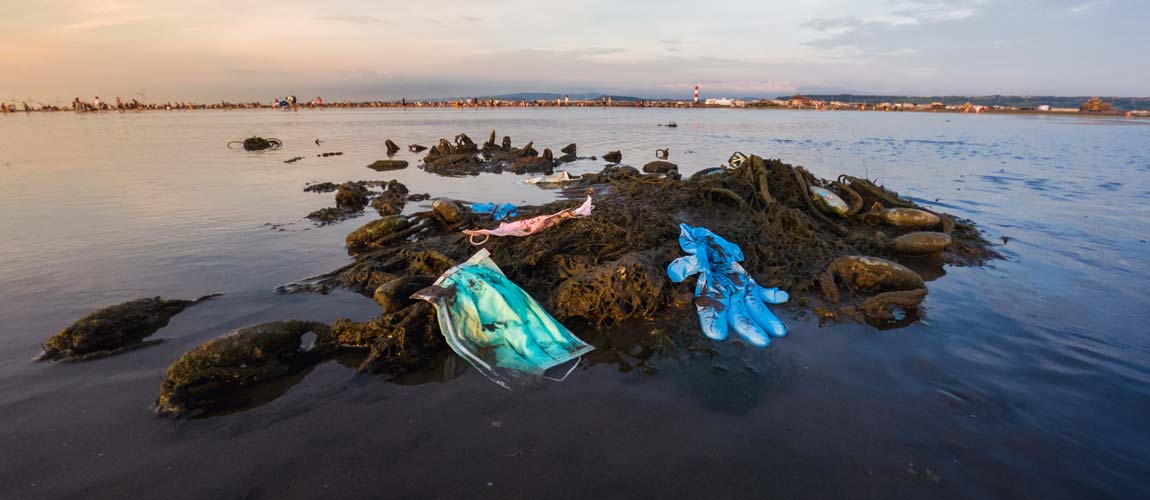
This article will answer the question: ‘how can businesses reduce plastic use?’. We’ll examine what the UK government, environmental organisations and industry networks are doing to tackle the plastic problem and support businesses. We’ll then explore ways companies can reduce their plastic use and make more responsible decisions around consumption.
We’re committed to supporting consumers to understand ways to reduce their negative impact on the environment. We offer tips and guidance for businesses looking to introduce eco-conscious strategies and meet sustainability KPIs at work; discuss how to combine health and safety and sustainability in the workplace on our blog.
What is the UK government doing to tackle the ‘plastic problem’?
The UK government is taking its role in tackling the climate crisis seriously, with plastic use and plastic pollution playing a significant role in recent and upcoming policies, legislation and guidance.
Combatting Single-Use Carrier Bag Consumption
In 2015, the UK government introduced legislation to charge consumers for using a new plastic carrier bag across the retail sector, including all supermarkets and shops. Since then, this carrier bag charge legislation has reduced the use of single-use carrier bags by over 95%. The bag charge successfully sparked a change in retailer and consumer behaviours across the UK, encouraging people to bring reusable bags to shop and reducing reliance on the convenience of single-use plastics.

Ban on Plastic Microbeads in Cosmetics and Personal Care Products
The government introduced a ‘world-leading’ ban on microbeads found in rinse-off cosmetics and personal care products such as shower gel or toothpaste. Businesses and manufacturers are no longer allowed to produce or sell products that contain harmful plastic microbeads, reducing the number of plastic particles entering the water system and polluting rivers and oceans. The ban has been praised by campaigners as ‘one of the toughest in the world’ and will continue to prevent billions of plastic microbeads from polluting the natural environment.
The 25-Year Environment Plan
Released by the Environment Minister in 2018, the 25-Year Environment Plan aims to address environmental issues and implement long-term change nationally. The plan includes targets to:
- Eliminate avoidable plastic waste by the end of 2042
- Significantly reduce and (where possible) prevent all kinds of marine plastic pollution – particularly material that came originally from land.
One of the Environment Plan’s ongoing strategies is the ‘Making the most of packaging: a strategy for a low-carbon economy’, released in 2011. This strategy set out measures to ensure that all ‘packaging is designed to use as little material as will do the job, and with re-usability, recyclability or recovery in mind as standard’ within the following decade.

The 2018 ‘Litter Strategy for England’ is another element of the Environment Plan. It set goals to address the national litter problem and reduce pollutants in rivers and seas. Part of the strategy is to ‘encourage businesses to work with others to deal with local litter problems’ and to ‘ask businesses to think about designing their products and packaging in ways which will reduce litter’. This includes tackling excessive or unnecessary use of single-use and virgin plastic packaging that can’t be reused or recycled.
The 2021 Environment Act
After the success of the carrier bag charge, microbeads ban, and implementation of the Environment Plan, British authorities made moves to go even further by passing the Environment Act in 2021. Some of the laws that will be introduced to tackle the plastic problem will include the following:
- The introduction of deposit return schemes for plastic bottles.
- Extended producer responsibility concerning packaging.
- Establishing greater consistency in recycling systems across all local authorities.
- Improving controls over the export of plastic waste
- Introducing charges for more single-use items.

Ban on Single-use Plastic Products
The UK government has also announced a new, ‘far-reaching’ ban on single-use plastics that will be introduced in the UK in October 2023, giving businesses a chance to prepare. Once introduced, the legislation will ban all single-use plastic plates, bowls, trays, balloon sticks, and certain polystyrene food containers and cups. From October, these products won’t be available to buy from any business, whether they are retailers or in the hospitality industry, such as cafes, restaurants, takeaways, food vendors, or drinks kiosks.
This legislation will particularly affect the hospitality sector, requiring restaurants, cafes and other food outlets to reduce plastic use and find alternative, environmentally-friendly solutions.

UK Leading the Global Conversation on Plastic Pollution
In partnership with the Ocean Plastics Leadership Network, UK leaders are working to lead the global conversation towards tackling plastic pollution, hoping to work with the international community and agree on an international treaty that will obligate countries to reduce plastic pollution across the whole plastics life cycle throughout production, consumption, disposal and waste management. The first formal talks began in December 2022, facilitated by the UN Environment Programme.
Simplify Workplace First Aid
Interactive Online Guide & Downloadable Brochure
Simplify Workplace First Aid
Interactive Online Guide & Downloadable Brochure
Choose the format that works for you: check out our Workplace First Aid Interactive Online Guide or download our 2-in-1 Workplace First Aid & Advanced Life Support Buyers Guide as an easy-to-save PDF. Both include a self-assessment, product details, and comprehensive training and support.
We all Play a Role in Reducing Plastic Use
The government can’t tackle the overconsumption of plastic and the continued increase in plastic pollution alone. Industry leaders, individual businesses and corporations, and voluntary initiatives are working together to reduce plastic use, find alternative solutions and create lasting change across society to minimise plastic’s threat to the global environment.
Many businesses and organisations in the medical and healthcare sector, including suppliers like Steroplast, are looking for alternative materials, ways to reduce plastic waste, and improve recycling across the industry. You can find out more information about these efforts in the following articles from our Knowledge Base:
Uniquely Sustainable in the UK
Eco-Friendly First Aid Range
Discover our selection of high-quality, eco-friendly first aid products. Packaged thoughtfully in recycled materials and designed with minimal plastic use.
Voluntary Initiatives are Working with Industry Members to Support Businesses to Reduce Plastic Use and Innovate
Several voluntary initiatives have established themselves in national efforts to change how plastics are designed and produced, improving how plastics are used, reused, disposed of, recycled and repurposed in the UK. These changes require the involvement of, and cooperation from, all stakeholders in the plastic chain, including producers, suppliers, businesses, consumers, waste and recycling departments, and more.
Some of the key initiatives addressing plastic use and plastic waste pollution include:
The UK Plastics Pact
Supported by the government and overseen by the Waste and Resources Action Programme (WRAP), the pact is a collaboration between businesses in the national plastic value chain. They intend to create ‘a circular economy for plastics, capturing their value by keeping them in the economy and out of the natural environment.’
Together, Pact members have set targets to meet by 2025:
- Eradicate all single-use plastic packaging deemed unnecessary
- Ensure all plastic packaging is reusable, recyclable, or compostable
- Recycle or compost a minimum of 70% of plastic packaging
Plastic Pact members have identified multiple ‘problem plastics’ that need to be addressed and ideally eliminated from circulation. Six of the most recently identified ‘problem plastics’ include:
- Plastic wrapping for multi-sales of tins, bottles, and cartons
- PVC cling film
- Non-compostable fruit/veg stickers
- Non-compostable tea and coffee bags
- Single-use, single-serving plastic sachets/jiggers in restaurant settings
- Plastic packaging for uncut fresh fruit & vegetables, unless it is demonstrated to reduce food waste

When asking the question ‘how can businesses reduce plastic waste?’ these ‘problem plastics’ are a positive place to start. If you’re wondering how your business can contribute to plastic-reduction efforts, check out these WRAP-approved resources that discuss what changes your business can make.
The Plastics Industry Recycling Action Plan (PIRAP)
Established in 2015 by the British Plastics Federation (BPF), PIRAP is an industry action plan to increase the recycling of plastics across the UK. It’s a ‘whole value chain approach’, which considers the entire life-cycle of plastics through sourcing materials, production, consumption, and disposal or recycling. PIRAP’s key initiatives are to:
- Increase collection
- Improve sorting
- Develop end markets for recycled plastics
If your business involves the use or production of plastic to manufacture or package your goods, PIRAP is an excellent resource to support efforts to improve sustainability, minimise reliance on virgin plastics, and increase recycling rates. The BPF also set up a Business Support Network for companies in the plastic industry looking to collaborate and improve their processes sustainably.
The UK Circular Plastic Network (UKPCN)
The UKPCN is a network of over 5000 plastic product producers and users, academics, government members, NGO representatives, and individual business owners. The UKPCN encourages communication between members, bringing stakeholders together to share knowledge and find ways to innovate, and ultimately work to meet the Plastic Pact’s 2025 goals.
For business owners looking to reduce plastic and innovate alternative solutions throughout their organisation, the UKPCN offers regular funding and opportunities that businesses can apply for. This funding is dedicated to supporting projects, products or research into progressive solutions for plastic reduction that will contribute to the UK economy. Business owners can look through and apply for the funded opportunities currently available on the UKPCN website.
Ways for UK Businesses to Reduce Plastic Use
You should now have an idea of what the government, industry leaders and voluntary initiatives are doing to tackle the ‘plastic problem’ and are likely wondering ‘how can businesses reduce plastic use?’ We’ll take you through some of the best solutions you can implement in your business or workplace.
Do a Plastic Audit
Every business is different, so it’s crucial that you have a realistic understanding of the plastic consumption and waste of your business or workplace. A plastic audit consists of monitoring the amount of plastic that comes in and out of your business, including any produced as part of your operations. Factor in all plastic packaging that comes in with the delivery of goods, the plastic used by your workforce, what plastic is sold through your business, and what ends up in recycling streams or waste. Taking the time to analyse and understand the flow of plastic throughout your business or workplace will enable you to find ways to reduce or eliminate plastic use. WRAP provides a Waste Audit Guide for Businesses to support this process. We also cover this in our article on ways to reduce plastic waste in hospitals.
Publish a Plastic Reduction Initiative for your Company
Positive messaging and leadership from the top can make all the difference in changing the workforce and consumer behaviour. By writing and circulating a company plastic reduction initiative, accountability across the business will be in place, encouraging all stakeholders to make positive changes.
Ways to encourage compliance with plastic-reduction initiatives include:
- Educating your workforce on the need to reduce harmful plastic use. Make your staff aware of safe and responsible ways to do this.
- Emphasise the plastic-reduction initiative with posters and signage on-site to remind staff of their responsibilities.
- Introduce employee incentives for plastic-reduction efforts.
- Spread the word to your consumers through marketing and information provided on any packaging on your products.

Eliminate Single-use Plastics
The upcoming ban on single-use plastics will significantly impact the availability of many single-use plastic products, but it won’t completely eliminate opportunities for people to use single-use items for convenience. Your plastic audit will likely have highlighted areas of your business operations and staff behaviours where single-use plastics are consumed and thrown away, often unnecessarily.
Some simple solutions for eliminating single-use plastics from your business are:
- Use biodegradable waste bags for refuse, rather than plastic bags or binliners.
- Encourage staff to use reusable hot beverage containers for coffee or teas, discouraging them from bringing disposable takeaway containers into the workplace.
- Ensure all staff members use a reusable water bottle at work instead of disposable options. You can encourage this by providing water stations onsite for convenience.
- Provide reusable crockery and cutlery on-site for staff to use. Provide access to washing-up facilities to maintain cleanliness and deter staff from opting for the convenience of throwaway utensils.
- Eliminate the need for plastic packaging on products you manufacture or distribute. The UK government’s Plastic Packaging Tax was introduced in April 2022 to incentivise all businesses to use or make more responsibly manufactured plastic. This tax only applies to businesses that manufacture or import plastic that contains less than 30% recycled plastic. If you run a business that uses plastic that contains 30% recycled plastic or over, this tax will not apply to you.
For hospitality businesses wanting to reduce their plastic use and that of their consumers, some additional easy switches include:
- Reuse plastic containers for food stock.
- Provide reusable metal or paper strawers rather than plastic ones.
- Use biodegradable cellophane rather than plastic-based clingfilm to cover food products.
- Serve cold beverages in glassware rather than plastic containers. Or sell drinks in cans or glass bottles rather than stocking products supplied in plastic.
- Serve all takeaway products in plastic-free, biodegradable packaging such as paper bags, cardboard boxes and compostable coffee cups or cold beverage containers.

Find Solutions for Plastic-free Packaging on Goods and Supplies
While reducing the amount of single-use plastic and educating your workforce to eliminate plastic use where possible will make a huge difference, the plastic packaging coming into your business will still contribute significantly to your plastic consumption.
Consider the supplies your workplace regularly orders in such as stationary, food products, first aid supplies, raw materials, etc. Are there any ways to reduce the plastic packaging goods arrive in?
Ways to address plastic packaging levels in your business include:
- Talk to members of your supply chain and ask for plastic-free solutions wherever possible. Instead, request that goods be sent in biodegradable packaging or recyclable cardboard boxes.
- Switch to sustainable workplace first aid supplies such as our NEW eco-friendly first aid kit. Most of its premium-quality contents come in medical-grade paper packaging that can be recycled, all supplied in a 100% recycled and reusable first aid container. It’s HSE-compliant and boasts a 94% reduction in plastic packaging compared with standard first aid kits, reducing the amount of plastic wrapping thrown away.
Efficient and Effective Recycling Procedures
Eliminating single-use plastics and reducing the amount of plastic packaging coming in and out of your business will make a significant difference, but these efforts aren’t likely to completely eliminate plastic consumption in most businesses.
Responsible and efficient recycling procedures for all recyclable waste, not just waste paper, in your business is essential to tackling plastic pollution.
Ways for businesses to encourage proper recycling of plastic include:
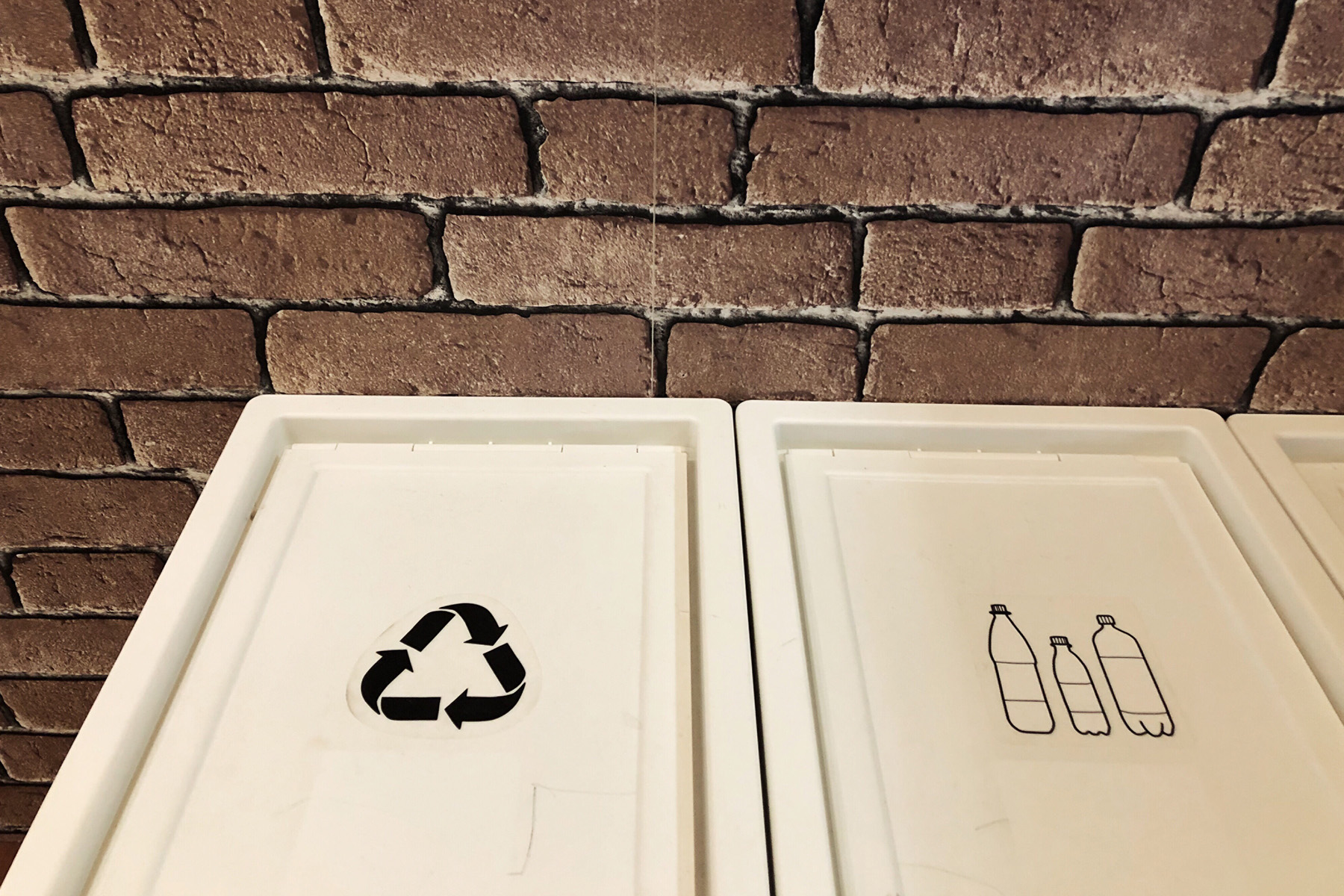
- Provide accessible, clearly labelled and regularly maintained recycling bins for employees and customers throughout business operations.
- Communicate with local authorities about what they can and can’t recycle in your area.
- When plastic waste can’t be collected with regular recycling, arrange a rota for volunteers to take plastic waste to a local recycling unit regularly, reducing the opportunity to throw plastic waste away.
- Work with a dedicated recycling company that can sustainably dispose of your plastic waste.
Want to know more about sustainable first aid solutions? Check out these recent articles on our blog:
Please enter your details into the form below along with any questions or comments and a member of our team will be happy to provide you with more information: