|
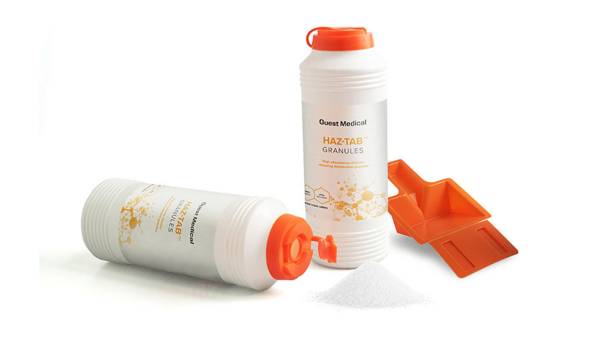
Haz-Tab Granules – NaDCC Chlorine-Releasing Formula – 500g Tub – For Blood and Body Fluid Spills – EN Standard Tested
£9.54
£7.95
Haz-Tab Granules (500g) combine the disinfecting power of troclosene sodium (NaDCC) with a fast-acting absorbent to safely contain and disinfect blood or body fluid spills. Designed for healthcare settings, they make it easy to manage spillages while keeping hands away from potential hazards such as broken glass and sharps.
Availability:
In stock
SKU
8230/1




Safe and Effective Control of Blood and Body Fluid Spills
Haz-Tab Granules provide a reliable solution for managing blood and body fluid spillages. They combine the disinfecting action of troclosene sodium (NaDCC) with an absorbent powder, allowing spills to be safely contained, disinfected, and removed. This combination offers strong protection for those handling biohazardous materials, reducing the risk of contact with infectious fluids, broken glass, or sharps during clean-up.
Tested by a UKAS-accredited laboratory, Haz-Tab Granules meet multiple EN standards, confirming broad-spectrum biocidal activity against bacteria, fungi, viruses, mycobacteria, and spores, including C. difficile. This makes them suitable for use in healthcare and other professional environments where safe and efficient spill management is vital.
Traditional liquid disinfectants such as hypochlorite can spread spills and lose effectiveness in the presence of organic material. In contrast, Haz-Tab Granules absorb the spill and release chlorine simultaneously, ensuring effective disinfection and easier handling. Trusted by healthcare professionals, they offer a practical and proven method for biohazard control.
6 Benefits of Haz-Tab Granules
- Chlorine-based disinfection and absorption: Combines sodium dichloroisocyanurate (NaDCC) with an absorbent granule to safely contain and disinfect blood and body fluid spills.
- Effective control of biohazards: Proven activity against bacteria, fungi, mycobacteria, viruses, yeasts, and bacterial spores, including C. difficile.
- Independently tested: Verified through EN Standard testing by a UKAS-accredited laboratory, meeting BS EN 1276, BS EN 13727, BS EN 14476, BS EN 13624, BS EN 13704, BS EN 17126, BS EN 13697, BS EN 14348, and BS EN 16615 standards.
- Safe and efficient clean-up: The granules absorb and disinfect simultaneously, reducing the risk of contamination and keeping hands clear of potential hazards such as broken glass or sharps.
- Practical and simple to use: Designed for quick, controlled clean-up with minimal mess, avoiding the problems caused by traditional liquid disinfectants.
- Trusted by healthcare professionals: Used across hospitals and healthcare environments for reliable blood and body fluid spill management.
Trusted by Healthcare Professionals for Safe Biohazard Management
Haz-Tab Granules are designed for anyone responsible for managing blood or body fluid spills safely and efficiently. They are widely used by healthcare professionals in hospitals, clinics, dental practices, laboratories, and care facilities—any environment where there’s a risk of biohazardous contamination.
The granules combine an absorbent material with troclosene sodium (NaDCC), a chlorine-based disinfectant, offering protection to staff handling blood or blood-stained fluids. When used with scoops and scrapers, they allow spills to be collected quickly while keeping hands away from sharps or broken glass.
Tested to multiple EN Standards by a UKAS-accredited laboratory, Haz-Tab Granules have demonstrated broad-spectrum biocidal activity against bacteria, fungi, mycobacteria, viruses, and spores, making them a trusted choice across healthcare and laboratory settings.
They provide a safer and cleaner alternative to traditional liquid disinfectants, helping ensure that biohazardous waste can be contained, disinfected, and disposed of responsibly.
Product Specifications
| Specification | Details |
| Active Ingredient | Troclosene Sodium (NaDCC) |
| Type | Chlorine-releasing disinfectant and absorbent granules |
| Purpose | To safely absorb, disinfect, and assist in the removal of blood or blood-stained body fluid spills |
| Biocidal Activity | Effective against bacteria, fungi, yeasts, mycobacteria, viruses, and bacterial spores (including C. difficile) |
| Test Certification | Independently tested to meet EN Standards by a UKAS-accredited laboratory: BS EN 1276, BS EN 13727, BS EN 14476, BS EN 13624, BS EN 13704, BS EN 17126, BS EN 13697, BS EN 14348, BS EN 16615 |
| Formulation | Granular absorbent with chlorine disinfectant action |
| Pack Size | 500g tub |
Frequently Asked Questions
Haz-Tab Granules are used to safely contain, disinfect, and remove blood or blood-stained body fluid spills. They combine an absorbent material with the disinfecting power of troclosene sodium (NaDCC).
The granules absorb the spillage while releasing chlorine from NaDCC to disinfect the area. This process allows for safe handling and disposal without spreading the spill.
Yes. They have been independently tested to recognised EN Standards by a UKAS-accredited laboratory and shown to have broad-spectrum biocidal activity against bacteria, viruses, fungi, mycobacteria, and spores.
Yes. They are hospital-grade and trusted by healthcare professionals for managing blood and body fluid spills safely and efficiently.
The active ingredient is troclosene sodium (NaDCC), a chlorine-based compound known for its disinfecting properties.
After absorbing and disinfecting the spill, the collected waste should be placed in a biohazard waste bag and disposed of according to local regulations. For more information, see our guide on how to dispose of biohazard waste bags responsibly.
Write Your Own Review