Wounds - Do you know how to correctly treat them?
This will help you analyse the wound and give you the skills to treat it correctly.
Any individual, living a normal day-to-day life will at some point incur an injury in some form or another. Whether you stay in all day and attempt to avoid any form of danger or you're an adrenaline junkie who loves to put their lives on the line every weekend. The probability of incurring wounds will obviously change but at some point you will hurt yourself.
The most likely and least harmful injury will be a slight cut, from paper to a kitchen knife. The human body is equipped with a great ability to heal itself from minor injuries. However knowing the basics of first aid and having the right equipment in your home or with you to prevent an injury from turning serious is always the best option.
If the injury happens to be serious, having the correct knowhow and equipment on hand to help treat it whilst the professional help arrives or you get the patient to a doctor/hospital is the best way to make sure the injury doesn't become serious.
Limited-Time Deal on Personal First Aid
20% off Steroplast Mini Burn First Aid Kits
Fast, effective treatment for common burn injuries at home, work or on the move. Includes Burnshield dressings and hydrogel sachets for immediate cooling and pain relief. Supplied in a compact plastic case for kitchens, vehicles and grab bags.
Use code BURNCARE20 at checkout.
Different types of wounds
There are several different wounds that any person could incur, each has it's very own way of being treated. Wounds can be categorised as: abrasion, avulsion, incision, laceration, puncture and burn.
ABRASION - A wound caused by friction, scraping a part of your body across a rough surface. This is very common, and can be seen in every playground in every school. Or happening to overexcited dancers sliding on their knees at parties!
AVULSION - This is much more painful than an abrasion wound. This is surface trauma that has resulted in a layer of skin being torn away, to expose the underlying structure. This is not your average school disco injury, this is more apparent in a car accident.
INCISION - A cut that has a clean edge, an incision isn't caused by scraping. This is a wound resulting from an incident with a sharp edged object like a knife, a razor, or a piece of glass. This is one that happens when you're chopping carrots and get distracted.
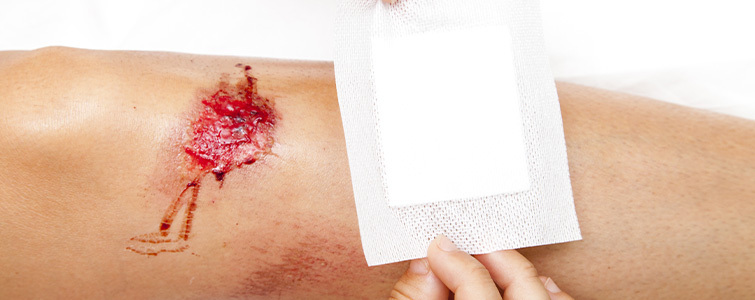
LACERATION - This is similar to an incision but it isn't as clean. The wound has jagged edges causing an irregular break in the skin. There are five general types of laceration (split, over-stretching, grinding compression, cut and tearing), this is usually caused when an object strikes the skin and causes a wound to open. It is usually due to a powerful blow, collision or fall and is sometimes apparent during childbirth.
PUNCTURE - A wound caused by an object or something passing through the skin or impaling. The gravity of this injury stretches from minor to life threatening, from a life threatening stabbing to simply standing on a broken Christmas decoration without your slippers on!
The right treatment for your wound
Once the damage has been done, the best action is to react quickly and treat the wound. This reduces the individual's pain and result in a quicker overall healing time.
Every wounds will come with its own degree of pain. But this pain will obviously vary according to the injury's severity, nature and location on the body. However it's important to remember that some wounds may hurt less but can potentially be much more serious if left untreated.
Abrasions
This is usually a minor injury that can be treated relatively easily at home/work/school, with the supplies found in a standard first aid kit. The first step is to clean the area (make sure you have thoroughly washed your hands, so not to spread any infection to the area). Rinse and clean the entire area with cool/lukewarm water and mild soap or use wound wash solution. Don't be too forceful when cleaning the wound area, no scrubbing in necessary! Simply make sure to remove any dirt or debris. Cleaning the area thoroughly will prevent the risk of infection. It isn't usually necessary to use anything stronger on a minor abrasion.
If the abrasion is bleeding, using a sterile bandage or gauze and apply gentle pressure directly to the area and elevate the wound. Continue this process if the bleeding continues, however if after 10 minutes the wound is still bleeding, then you should seek medical advice. If the bleeding has stopped, use a bandage or taped gauze to cover the area keeping it clean and preventing any infection from bacteria. Change this dressing each day or if the area gets wet or dirty.
This should be all you need to do and within a week the wound should be fully healed. However, you must call a doctor if:
- There are signs of infection (the wound feels warm or if it is turning red and becoming swollen)
- The wound is not healing
- The wound is getting worse
- The individual is experiencing an increasing amount of pain
- The individual has a fever
- There is discharge from the wound
Avulsion
An avulsion can range in severity from minor to major, obviously if there is a major issue then make sure to call the emergency services immediately! If however it is a treatable wound or if assistance will take some time you can take steps to treat the wound. Firstly, if you are not the victim then you must wear personal protective equipment if available especially gloves (make sure to check if the individual has a latex allergy first, if so and they're available use Nitrile gloves instead).
The initial step is to minimise any bleeding, so apply direct pressure on the area, using an clean absorbent bandage or gauze. Secondly rinse the wound with water or even better sterile wound wash solution. If there is still a flap of skin that has been created by the injury, you should replace this over the area and dress the entire wound with bandage/gauze. If the wound is small, over time it will heal naturally, so change the dressings each day and keep an eye on its progress. However if the wound is large, the skin has been completely torn away or if the wound was caused by an animal bite, get the individual to a hospital.
Incision
If an incised wound is small you can use first aid to stop the bleeding, anything of a larger size must be treated as an emergency. When treating a minor wound, you must first concentrate on stopping the bleeding. Pressure must be applied onto the area and a sterile absorbent gauze or cloth placed over it. The pressure needs to be kept on for a substantial amount of time, using your fingers to push down through the gauze/cloth. If the bleeding stops (hopefully after a few minutes) place another gauze on top and then bandage the area. Do not remove the initial piece as the clot you have formed on the wound will get dislodged and it will re-open the wound and start the bleeding all over again.
If the wound itself is to a hand, arm or leg - then keep this elevated above the heart level. This will reduce the flow of blood to the extremity and the cut itself. After 5 minutes of the bleeding stopping, you can then remove the gauze and clean the area with antiseptic solution or soap and water (do not use hot water as this may tear your tissue and cause more bleeding) to prevent any infections, make sure to remove any dirt or debris. Once clean, place antibacterial ointment directly on the wound and cover with a new sterile gauze and adhesive bandage.
However, if the wound won’t stop bleeding then you must contact a doctor immediately. Also consult the doctor to check if a tetanus shot is needed.
Laceration
Minor lacerations can be treated in the same manner as an incised wound: pressure, elevation, clean, bandage. However anything over 5cm or that involve deeper tissue damage will need medical attention. Get yourself or your patient to a doctor or hospital as stitches may be needed
Puncture
The severity of a puncture wound will determine whether the emergency services are needed. If you are unsure, check for the following symptoms any if any are apparent. A trip to the hospital is vital:
- A puncture has been caused by an object that cannot be removed easily
- The wound is spurting blood or bleeding excessively
- The bleeding will not stop after 10 minutes of pressure
- The puncture is deep or touching bone
- The wound is to the eye, throat, chest, abdomen or neck
- The individual is experiencing severe pain, increased/problematic breathing, dizziness, vomiting or unconsciousness
- The wound is visibly dirty
- The puncture was caused by a bite from a human or animal
- The puncture occurred through the bottom of a shoe
Alternatively
If none of these are apparent and the wound isn't visibly severe, then it can be treated at home with standard first aid kits as with other injuries.
Firstly, and if possible, remove the object that has caused the damage. Doing this will most likely lead to bleeding, the treatment for this is similar to the other wounds; apply pressure with gauze or bandage until the bleeding stops, rinse and clean the area, apply antibiotic cream and then dress with sterile bandage. Puncture wounds can be painful so it may be necessary to take a painkiller but check with a doctor beforehand. A follow up may be necessary on these types of wounds, if there are any signs of infection. If a tetanus or antibiotics are needed, go to the doctors as it is always better to be safe than sorry.
Remember is DO NOT dismiss a small wound, every time you damage your skin no matter the size; attention and the correct treatment is vital so it can fully heal.
It is imperative to always have a fully stocked first aid kit, there are many different kits available. It is possible to find kits ideal for the home, vehicles, even kits designed for holidays and outdoor use. Your place of work must have its own kit to adhere to working standards.
If you have any queries about our kits or dressings, call our team on 0161 902 3030 for more information.
Visit our
Personal First Aid Online Guide
Find everything you need, from first aid kits, plasters & bandages to hot & cold therapy.