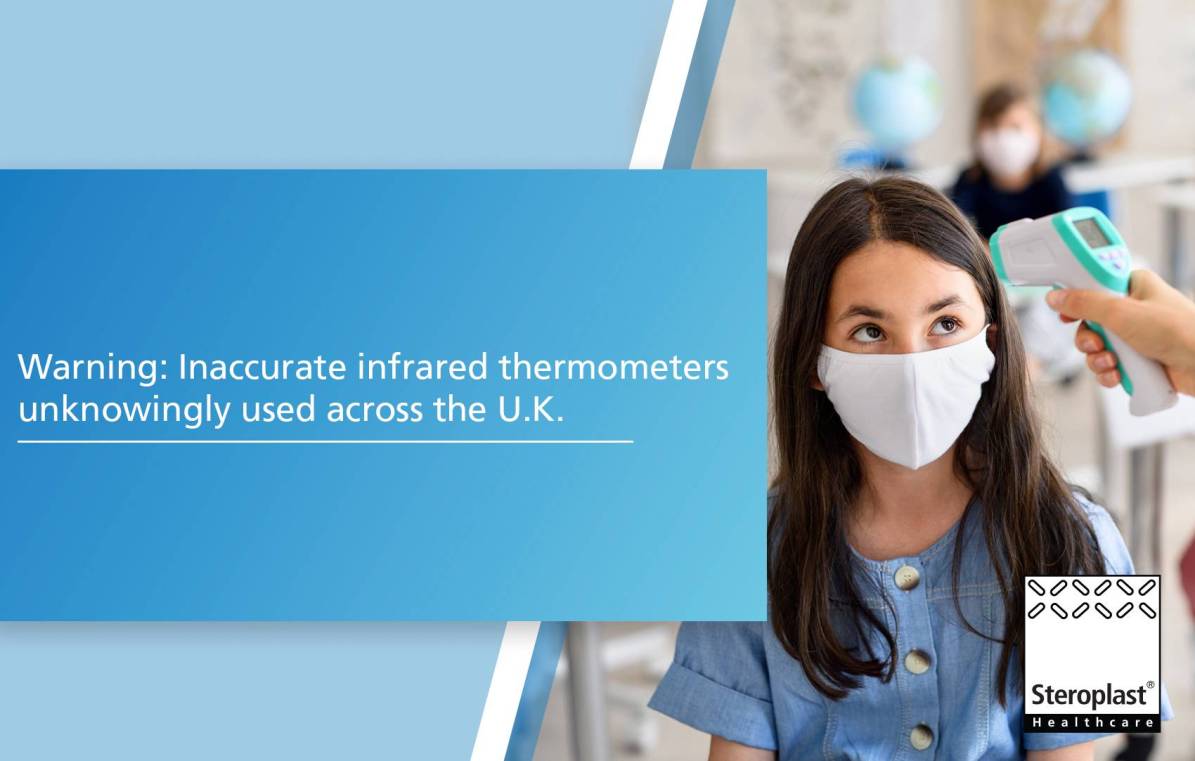

How to Use a Non-Contact Infrared Thermometer
How to Use a Non-Contact Infrared Thermometer
Non-contact thermometers have become an essential component of an infection control plan for many businesses. But lack of knowledge about how to use an infrared thermometer with a laser pointer correctly could mean you’re recording temperatures wrong, making your efforts futile.
Follow this guide, or show it to your staff, for how to use a non-contact forehead thermometer correctly.
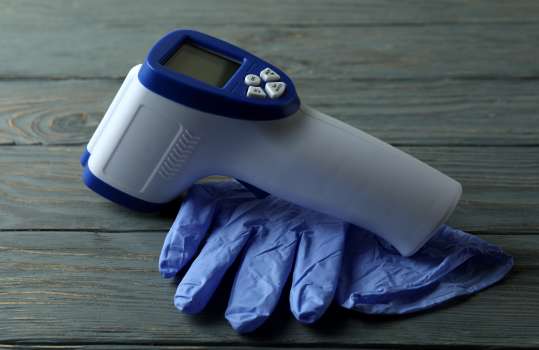

What Temperatures do Infrared Thermometers Measure?
Infrared thermometers are used in wide-ranging sectors and industries so their temperature ranges differ considerably. For example, a catering thermometer is likely to have a temperature range of -50°C to 520°C as it will be used to measure very cold environments like freezers, and very hot substances like boiling sugar. An IR thermometer for use in engineering or mechanics will also need to have a broad temperature range.
Medical-use infrared thermometers will have a more narrow temperature range, but this is because they only need to measure a certain spectrum. Put plainly, humans can only withstand temperatures in a general range of 33°C to 40°C, so it’s in this range that medical contactless thermometers need to be able to take measurements in.
Can You Take Body Temperature with Infrared Thermometer?
Yes. Certain Infrared thermometers are designed to take human body temperature readings. You can use an infrared thermometer to measure the temperature of an adult, child or baby as long as the product is designed for that use specifically.
You should only use an infrared thermometer to take body temperature readings if it has been made to do so and registered with the MHRA as having met the Medical Devices Regulations 2002. The UK government advises that consumers can identify an IR thermometer that has been approved for use by looking for the following information on the product or packaging:
- The manufacturer’s name and address.
- The name and address of the European representative or UK responsible person if the manufacturer is not in the UK or EU.
- The CE mark and a four-digit number that identifies the notified body which assessed the device.
- The name and/or the model number of the device.
- The batch or lot number.
Make sure your infection control plan is effective by using an approved, regulated device to take accurate readings.
How to Use a Non-Contact Thermometer
Using a non-contact thermometer is should be quick and easy, this is one of the reasons businesses have chosen to include temperature scans in their infection control plans. Here’s how to measure body temperature with an infrared thermometer.
1. Ensure batteries are installed or the device is charged.
The device may need time to warm up and adjust to the room temperature when it is turned on.
If you are using your contactless thermometer at the entrance to a bar or at a reception desk, allow 10-15 minutes in the morning to make sure it has adjusted to the ambient temperature.
2. Each thermometer is likely to have slightly different instructions on which buttons to press when preparing to take a temperature reading.
3. Depending on the specific product you are using, your thermometer might have different settings. Make sure it is set to the appropriate body temperature setting.
4. Check your thermometer is displaying temperatures in Celsius or Fahrenheit.
5. Follow the instructions on your product to take a temperature reading.
Precautions should be taken to ensure an accurate reading. Variables like aiming the lens incorrectly and environmental factors like other bodies and reflective surfaces can all affect the accuracy of a reading. Find out about taking accurate temperature readings in our blog post How Accurate are Non-Contact Thermometers.
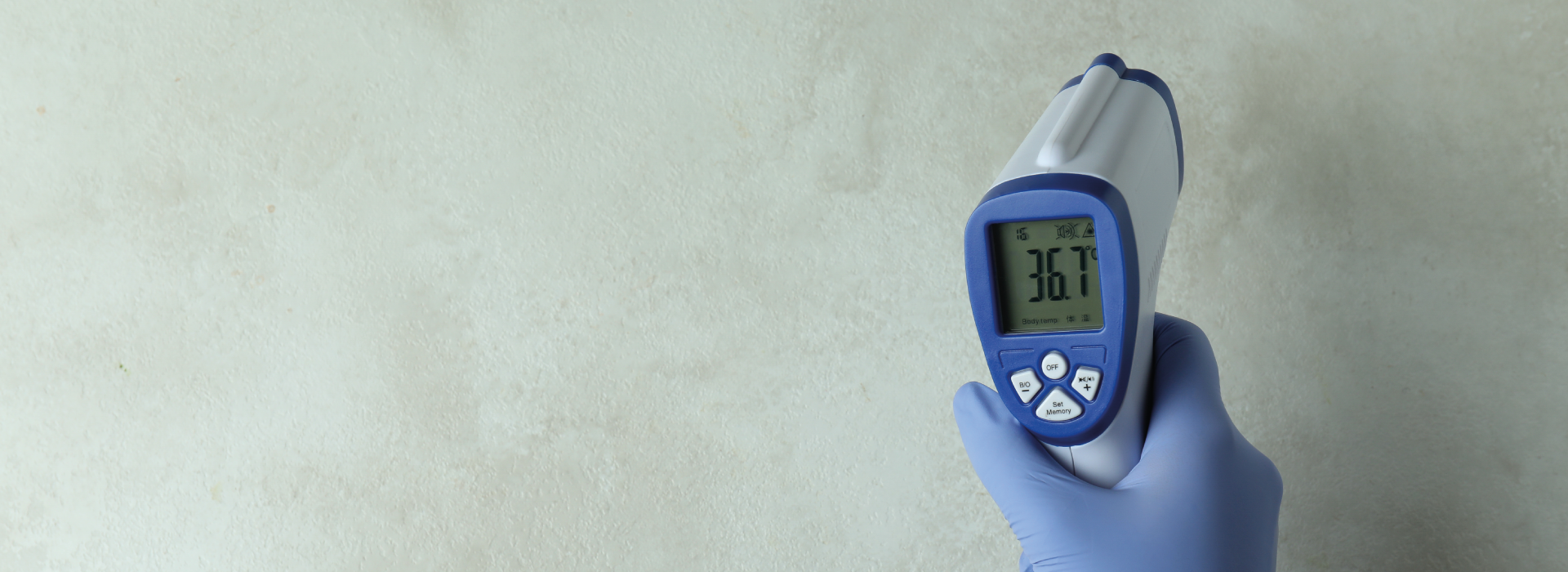
How to Reset an Infrared Thermometer
Knowing how to work an infrared thermometer is useless if the device is at fault for incorrect readings. Sometimes a contactless digital thermometer will need to be recalibrated to retain its accuracy. Regular recalibration is essential to make sure you are taking true temperature readings. Factors like mechanical shock and exposure (of the entire device, not just the lens) to extreme temperatures can cause a thermometer’s accuracy to drift over time.
Calculating the Offset Value of a Temperature Reading
Before recalibrating your thermometer you may have to determine the offset value. The Offset value is the difference between the real temperature of something and the temperature that the thermometer displays.
You can do this by measuring the temperature of something with your contactless thermometer and with a probe thermometer at the same time or quickly one after the other. If the temperature that the contactless thermometer displays is less than the real temperature, you have a positive offset. If the contactless thermometer reading is more than the real reading, you have a negative offset.
For example, if a person’s temperature is 37°C using a contact thermometer, but 38°C using a contactless thermometer, the offset is -1°C.
How to Repair Infrared Thermometers
You may have to contact the manufacturer’s customer service line if your contactless thermometer isn’t working correctly. But here are some instances you could check first to see if it’s possible to fix your infrared thermometer:
| Problem | Solution |
|---|---|
| The temperature reading is too high (higher than 43°C) | Check that the device is set to Celsius and not Farenheit |
| The temperature reading is too low (lower than 32°C) | Check the MODE of the device. On SURFACE mode the device will only measure external temperature and not internal (which is needed for body temperatures). |
| The device cannot read a temperature because it is too high | Check the device is in the correct mode. Check whether the area the device is being pointed at is being compromised. |
| The device cannot read a temperature because it is too low | Check the device is in the correct mode. Check the area that the device is being pointed at for obstructions. |
Reasons for a ‘Too High’ Reading
- The subject is being crowded with other people.
- The person taking the reading is too close to the subject (hold the device at arm’s length).
- There is a reflective surface near the subject reflecting heat onto them.
- The subject is wearing something reflective near their head.
- The subject has just removed a hat.
- Temperature readings are too close together (leave a space of 5, or ideally, 15 seconds).
Reasons for a ‘Too Low’ Reading
- The subject’s forehead is being obstructed by a hat or hair.
- There is a draft over the area being read.
- Temperature readings are too close together (leave a space of 5, or ideally, 15 seconds).
Simplify Workplace First Aid
Interactive Online Guide & Downloadable Brochure
Simplify Workplace First Aid
Interactive Online Guide & Downloadable Brochure
Choose the format that works for you: check out our Workplace First Aid Interactive Online Guide or download our 2-in-1 Workplace First Aid & Advanced Life Support Buyers Guide as an easy-to-save PDF. Both include a self-assessment, product details, and comprehensive training and support.
Please enter your details into the form below along with any questions or comments and a member of our team will be happy to provide you with more information: